Passing the university entrance exams and packing suitcases: nearly 1,000 young people from the Balearic Islands are going away to study
In the 2025-2026 academic year, 992 transferred their file to universities in other autonomous communities, a figure similar to that of other years

-
CAT -
CAST -
DE
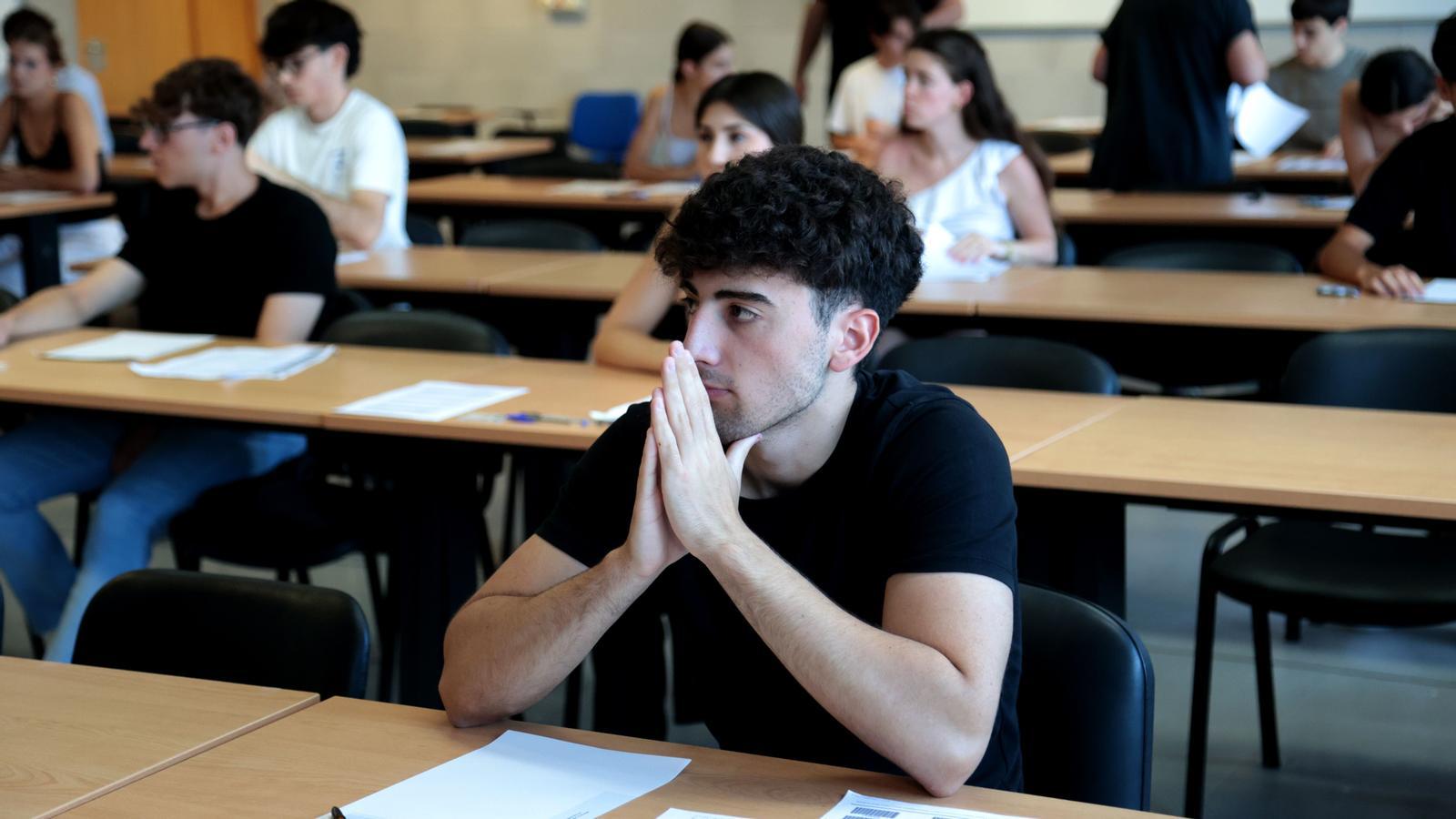
PalmaNearly a thousand students from the Balearic Islands who began university studies in the 2025-2026 academic year chose to do so outside the Islands. Specifically, 992 students requested the transfer of their academic records to universities in other autonomous communities, according to data provided by the UIB, which asserts that this figure is similar to those of previous years and "remains stable". This amount represents 24% of the 4,129 students who passed the PAU (university entrance exams) in the Balearic Islands that same year. The UIB expects to have the definitive data for the current academic year by next February.
In total, the UIB recorded 1,151 requests for academic record transfers, but this statistic also includes students who change universities without leaving the Islands. This is the case for the 111 students who moved to the Alberta Giménez Higher Education Center (CESAG), where one can study degrees such as Journalism, Nursing, Primary Education, and Physical Activity and Sports Sciences (CAFE). "In our statistics, the transfer of records also considers those students who go to CESAG, who do not leave the Balearic Islands," explains Cristina Moreno, Vice-Rector for Students and Educational Projection.

In addition, 41 students transferred their records to the National University of Distance Education (UNED) and another 7 to the Open University of Catalonia (UOC), also distance learning. In these cases, the change does not necessarily imply moving physically. "At the UNED, many of the students who enroll there do so to study Psychology. They are students who prefer to study at a distance," points out Moreno. Therefore, of the 1,151 registered transfers, 992 correspond to students who are going to universities in other autonomous communities.
The figure, according to the vice-rector, remains quite stable compared to previous academic years. Among the main destinations, the Polytechnic University of Valencia stands out, which received 131 students from the Balearic Islands during the last academic year. It is followed by the University of Barcelona, with 101, and the University of Granada, with 95. At a greater distance is the University of Salamanca, with 46, and the UNED, with 41. In contrast, the Complutense University of Madrid only received 9 students from the Islands.
Regarding degrees, Psychology is one of the fields of study that drives the most students to seek a place outside the Balearic Islands, although some opt for the distance learning modality of the UNED. Law also stands out, due to the fact that the UIB has a waiting list to access it. "It is one of the degrees that generates the most transfers," explains Moreno. Another degree that stands out is Architecture, which is currently not taught at the UIB but has already been announced to be implemented in the coming years.
The data also show territorial differences. Percentage-wise, students from Menorca, Ibiza, and Formentera are the ones who most often go to study away. In the Menorcan case, Moreno points out that there is an especially important connection with Catalonia, which is reflected in university destinations. For many years, Madrid had been one of the favorite destinations for students who wanted to leave. The figures, however, show that this trend is declining in an accelerated way.
Academic offerings, a determining factor
The departure of students does not respond solely to the lack of a specific degree. There are also many students who decide to leave to live the university experience away from home. But this experience is a matter of class: there are many students who cannot leave for the Peninsula because their families are neither humble enough to receive a scholarship nor solvent enough to be able to afford tuition, residences, and the day-to-day life of the students. All in all, the academic offer available is an important factor when explaining transfers. Moreno highlights that, since the implementation of Pharmacy and Physical Activity and Sports Sciences (CAFE) studies at the UIB, file transfers have decreased by almost half in these degrees. "They were two degrees for which many students were going abroad. This shows that there was a demand for these studies that we could not cover before and now we can," he states.
The movement also occurs in the opposite direction. The UIB receives students from other communities, especially to study Medicine and Nursing. Last year there were 65. According to Moreno, these two degrees are the ones that attract the most students from outside.
