An autumn pot
We explain to you how to prepare a soup without water, nor fire, nor pot

-
CAT -
CAST -
DE
PalmaMy little vegetable garden grew every day. Weeding, tying up the tomato plants, and watching how the water, drop by drop, quenched the plants' thirst rewarded me with a bounty of tasty fruits. Only the pumpkin plant resisted, until one day it seemed to wake up from its laziness, as if the heat had plunged it into a long lethargy. Its shoots began to grow and exceed the parceled limits of the garden. A branch, free on the other side of the fence, filled with healthy and vigorous fruits, like an open hand generously offering its gifts.
Autumn vegetables are characterized by a great diversity of shapes, colors, textures, and compositions that reflect the richness of the garden at this time of year. The green of the leaves of chard and cabbage coexists with the yellow, orange, red, and purple tones of other vegetables and fruits. Among them all, the pumpkin stands out for its dimensions, the variety of shapes, and the intensity of its colors, but also for the symbolic weight it has acquired over time. Linked to the cycle of nature and the abundance of the harvest, the pumpkin evokes the time to gather the fruits of the earth and to prepare for the cold months. The rounded shape, the resistant skin, and the hollow interior give it a unique presence in the popular imagination. Beyond its nutritional function, once hollowed out it can become a container, utensil, and decorative object, a transformation that explains its presence in various festive traditions.
A valuable food
The resistant skin and good storage capacity of some varieties have made the pumpkin a valuable food for pantries, as it allows it to be available for a prolonged period after the harvest. In Mallorca, Ibiza, and Formentera, it appears mainly as one more ingredient in stews, noodles, and rice dishes, while in Menorca we find a wider range of preparations, in which it assumes a prominent role. In the recipe book Art de la cuina, written in the 18th century by the Menorcan Franciscan Francesc Roger, we find recipes such as pumpkin pudding and fried pumpkin with garlic and vinegar. Later on, Pedro Ballester, in De re cibaria (1923), collects the diversity of uses of this vegetable, present in preparations ranging from soups to desserts.
I would like to highlight, however, a unique dish where the pumpkin is both container and ingredient: the Soup without water, fire or pot, from the Caules cookbook, from the 18th century, where this preparation is mentioned on two occasions.
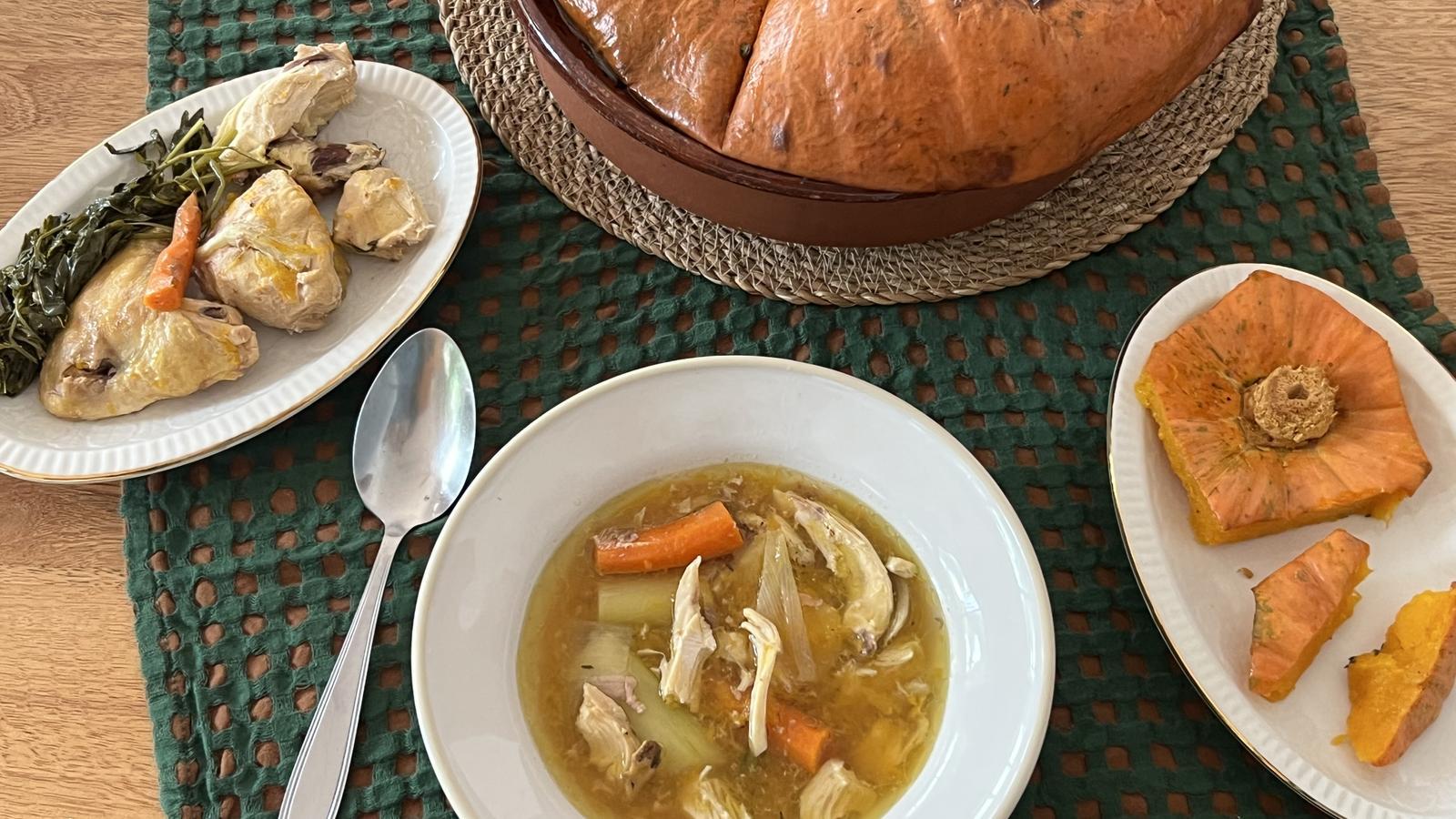
The formula starts with a pumpkin that is partially hollowed out, trying to preserve its shape and exterior structure. Inside, the meat, aromatic herbs, and vegetables are introduced, which cook inside the vegetable shell itself. Afterwards, the pumpkin is placed inside an earthenware pot, covered, and put in the oven. It is, therefore, not a decorative element or a simple accompaniment, but an essential part of the preparation. During cooking, the pulp adds sweet and vegetal nuances to the whole, while contributing to integrating the flavors of the ingredients.
Beyond the combination of foods, the feature that makes this soup unique is the technique used. The pumpkin becomes an improvised pot and the boundaries between the container and the content blur. The same vegetable that has grown generously in the garden is thus transformed into the container that holds and cooks the dish, in a very expressive example of the creativity of traditional cuisine.
If you want to try making today's recipe, I recommend a large pumpkin if you want it to make broth; if it is very small, there will hardly be any space left for the ingredients. It is also recommended to place it inside an earthenware pot so that it fits well.
First of all, we will make an opening in the pumpkin near the stem, creating a lid. Very carefully, we will scoop out most of the pulp without piercing the skin. We will place the meat, herbs, and vegetables inside, season with salt and pepper, and put the pumpkin lid back on. There must be space left for the broth. We will rub it with oil or lard and bake it at 180ºC for three hours. It is best to cover it with aluminum foil to prevent it from burning. Once the time has passed, we will take it out and serve. We will distribute the broth into each bowl, accompanied by the vegetables, meat, and pieces of pumpkin. With the pulp you removed while hollowing it out, you can make a cream.
l Chicken
l 1 veal or pork bone
l Carrot
l Leek
l Turnip
l Cabbage
l Onion
l Parsnip
l Garlic
l Celery
l Aromatic herbs, bay leaf, parsley, thyme
