From the 15-M to the tenants: what has changed?
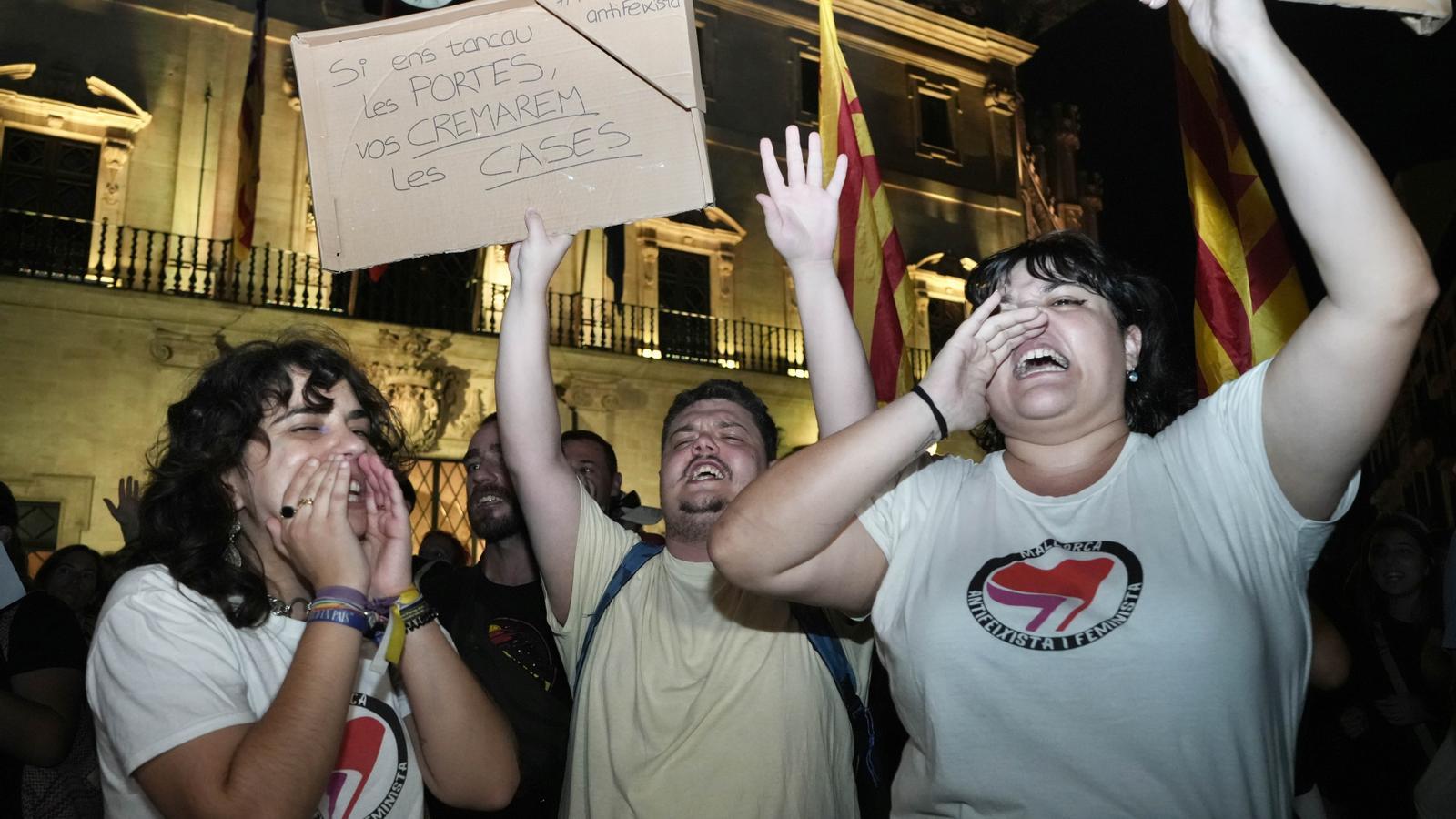

At the beginning of 2011, I found a note one day under my office door about an event called ‘The State of Malaise’. Added by hand was: “This is it!”. It came from a student, frustrated for some time by the lack of channels for political—and intellectual—expression for his generation. Shortly after, this same young man launched the hashtag #acampapalma, and in no time, Plaza de España became the Plaza of Iceland, in the wake of the 15-M movement.
Fifteen years later, with the new occupations of squares, many things have changed, others less so, and between the two, political life has polarized in a very particular way: it has bipolarized.
Among the things that have changed is the generation. Gen Z has replaced the millennials as the protagonists of the new mobilization. The economic context has also changed, from a deep crisis and dramatic social cuts to macroeconomic figures envied around the world. And there are also differences in the political framework: that cycle was triggered by a crisis of political legitimacy that targeted the two-party system (‘They don't represent us’, ‘PSOE, PP, it’s the same shit’), and the party system was shaken up with the arrival of new acronyms and leaders, and the disappearance or transmutation of many parties.
Among the things that have not changed is the social crisis, including the one regarding access to housing, which was already a central demand among the indignants, and who is blamed for it: the neoliberal agenda and the party system. Although these are global phenomena, they are expressed, as they were 15 years ago, as a challenge to the social pact of the Transition, of the Regime of '78, of a ‘democracy of owners’ that excludes the right to housing from the welfare state and splits the social structure, leaving at least a third of the citizenry by the wayside. And this is happening in times of plenty, because, say what you will, growth alone does not promote more prosperity for the majority and even less so more justice. Nor has the crisis of representation changed, the political orphanage of the youth and so many people, who have organized themselves without the radars of analysts, media, and, of course, political parties, having detected what was moving before their eyes.
The climate of excitement that Sánchez's latest audacity has unleashed, both on the right and on the left, by calling elections as a plebiscite on housing, turns the screw once more on the bipolarity of political emotions in recent years: sudden highs and lows in mood, from taking the heavens to depression, to the capitulation of some and the certainty of a military parade in others, and now, to euphoria and hysteria respectively. Just as with bipolar disorders, psychosis, the disconnection from reality, has been one of the dominant traits in the politics of recent years, on one side and the other. A large part of the blame lies with a series of theoretical and philosophical influences, used explicitly by the left, later copied by the right, according to which discourse is reality, and it is enough to announce a new political frontier for majorities to be recomposed. Podemos translated it into the formula of the caste against the people, and for a time it worked; the right has adapted it into a 'Perro Sánchez' against Spain, and it has worked very well for them. Thus, the social is a game of identities in opposition where the winner is whoever is capable of establishing the dividing line in their favor, through the narrative, through the frame, between the enemy to be defeated and the oppressed us.
Now, will the poles be repositioned around housing policy and will the social, and electoral, majority shift to the left? It will hardly do so just by the magic art of changing the narrative, now focused on housing. Reality is not exhausted in discourse, and what we are living is a necessary consequence of the failure to solve the structural problems that the indignant already pointed out. They have done nothing but worsen, whoever governs, having already closed without success the political cycle that spurred the 15-M. There are many, and deep, causes for the current situation. And one of them is the lack of an alternative project that addresses what is beyond, or below, the discursive framework: the long-term trends, the thread of the state of malaise that leads from the indignant to the tenants, whom neither right nor left have attended to, some out of principle, others out of conformism, and yes, also in complicity with rentierism.
