The Court's recipe in the face of resident discontent with tourism: cocktail workshops and guided tours
The Palma 365 Tourism Foundation is working on a campaign and a web platform that will offer exclusive experiences from November onwards to reinforce the sense of belonging of Palma residents

-
CAT -
CAST -
DE
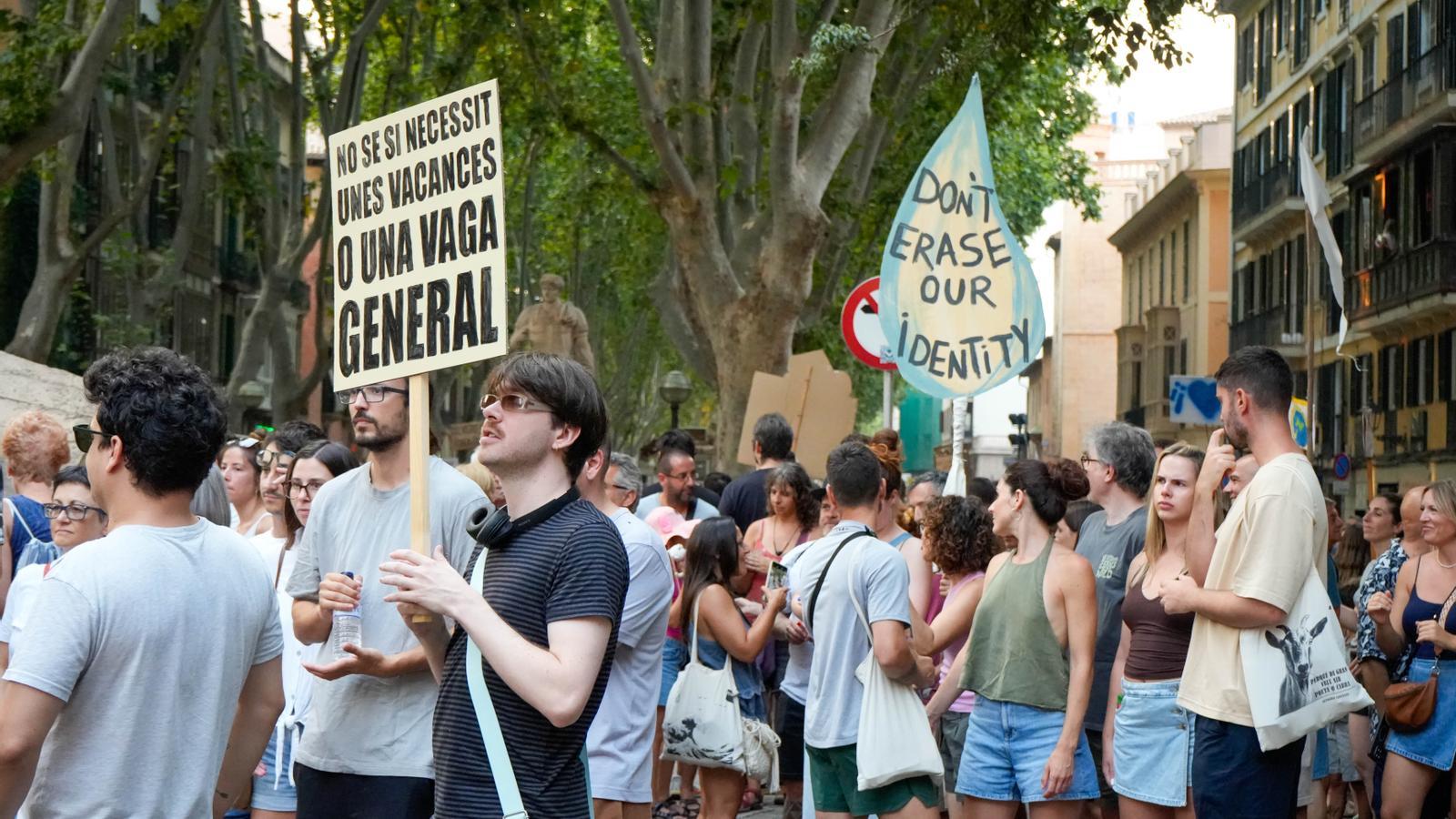
PalmaThe institutions of the Balearic Islands have acknowledged the impact of tourist saturation on citizens. However, the remedies to alleviate its effects are diverse, while the Islands are on track to reach 20 million visitors this 2026. In the case of the Palma City Council, the Fundació Turisme Palma 365 is committed to "improving the perception" that residents of the city have of tourist activity, with a strategy whose objective is to work on the "pride of belonging" of the people of Palma to their city, in the words of the entity's manager, Pedro Homar.
"The sustained growth in the number of tourists visiting our city makes it necessary to implement specific actions to properly manage the impact that the tourist phenomenon can have on both the resident population and the tourists themselves who visit us. It is necessary to plan initiatives that integrate tourist activity with local life, promote resident participation, and improve their perception," emphasizes the explanatory memorandum of the contract, which was awarded to the company 6tems Comunicació Interactiva SL for 37,020 euros and formalized on June 9.
"It is a matter of reinforcing the bond of belonging to the city, that residents feel proud of the city they have," insists Homar, and explains that there will be exclusive activities for the people of Palma. The manager gives some examples: "A workshop at a cocktail bar on Passeig de Mallorca, a visit to an emblematic shop, an activity to rediscover Miró at Son Boter, matters at hotels and restaurants...", he comments. "We have all these tourists who love what the city offers and we can highlight it. You can go to La Pajarita every day of the year," he adds with the example of this emblematic shop. Homar regrets situations such as a minority of visitors to the Fundació Miró being from Palma. "We can go there every Saturday, why don't we?", he asks, without valuing the audience to which the programming of this exhibition space is directed.
One of the activities that have already been finalized are monthly visits to neighborhoods of Palma. "In November, they will be held in L'Eixample. These are not tourist visits, but will be conducted with architects and urban planners. The aim is to understand how the neighborhoods have changed, what we have gained and what we have lost," points out the manager, and insists that they will be exclusive for residents and free.
When asked about the problems of Palma's citizens with housing and mobility as a factor in residents' disaffection, Homar points out that "it is true that everyone has problems" and admits that this project "does not eradicate the problems that each person has". "It is not our intention. Our side is not normative, we are not an entity of this kind. Everyone agrees that there must be limitations, but we do not get involved", he says. The objective that the Foundation pursues is that "the resident sees tourist activity as part of their daily life". "At no time has it been said that residents are not welcome. Faced with this reality, we want to integrate tourist activity into the city and the municipality, including Playa de Palma, and that the resident sees that this activity is part of the city", he adds.

The project, which will be launched in November, plans to create a website with activities at tourist facilities and a communication campaign. The explanatory memorandum points out the desire to "promote the integration of hotel and tourist heritage as part of the leisure activities of the local population".
On the other hand, Homar explains that the Foundation is also working on a modification of its statutes to place "a significant part of the focus on the citizens of Palma". "I have directed the Foundation since 2012 and the needs are very different. We must evolve and integrate the resident", Homar concludes.
