Cort will create a Metropolitan Area with Calvià, Marratxí and Llucmajor
Jaime Martínez announces contacts with the municipalities, the Council and the Government to create a new coordination body in the face of pressure on housing, mobility and public services
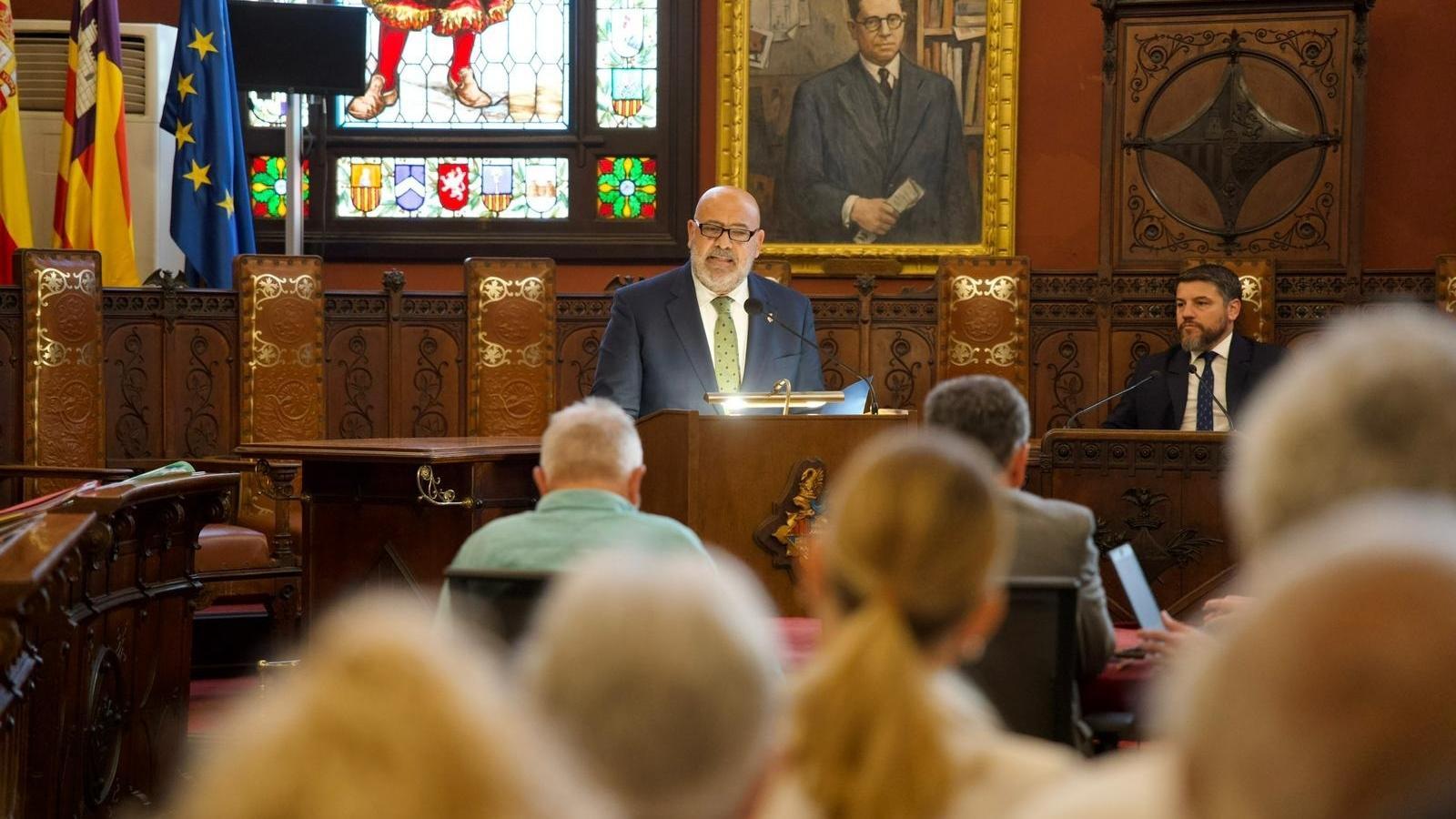
PalmaThe Palma City Council will create a Metropolitan Area with Calvià, Marratxí, and Llucmajor. This was announced this Monday by the Mayor of Palma, Jaime Martínez, during the debate on the state of the city. As explained, Cort will initiate contacts in the coming weeks with the city councils of these municipalities, as well as with the Consell de Mallorca and the Government, to provide this new entity with structure and institutional coordination, Europa Press reported.
Martínez defended that the objective is to "respond effectively to a reality that already exists on the ground and in the daily lives of thousands of citizens". In this regard, he stressed that Palma, Calvià, Marratxí, and Llucmajor form "a fully integrated urban, social, and economic reality", which goes beyond current administrative boundaries. The combined population of the four municipalities represents 46% of the total in the Balearic Islands.
The mayor justified the creation of the Metropolitan Area due to the "growing pressure" on infrastructure and public services, as well as "administrative duplications", planning difficulties, and efficiency problems in management. According to him, the new body should serve to "strengthen local autonomy, promote territorial cooperation, and build a more efficient, coordinated, and citizen-friendly administration".
In terms of housing, the mayor announced that in June, construction will begin on 166 limited-price rental homes in Camp Redó and Son Ferragut. The City Council will directly undertake the construction of 250 more homes after the tender for three plots was declared void. He also recalled the eight Strategic Residential Projects (PRE), which foresee 8,000 homes, in addition to the 139 flats planned in the old prison and the 831 in Son Busquets.
Martínez has placed housing as the main priority of the municipal government, followed by cleanliness and security. In this area, he announced that Local Police officers will patrol EMT buses to prevent minor offenses and uncivil behavior. Although he has led the municipal government for three years, the mayor also announced a "plan for regeneration, renovation, and revitalization" for neighborhoods "after decades of abandonment and unfulfilled promises", which will begin in Son Gotleu with a pilot protocol in collaboration with the Government.
Regarding Social Services, Cort will launch an emergency center for families in situations of risk and affected by climate emergencies, as well as a specific facility for homeless women and vulnerable single mothers in the Balanguera building. In terms of Education, Palma plans to open the Son Gibert and Son Dameto nursery schools next academic year, with 184 new places for 0 to 3 year olds, and to purchase those in Ciutat Antiga and Santa Catalina for 3.8 million euros. It has also ceded plots of land to the Government to build the Son Cladera Secondary School and a nursery school in Son Ferragut.
Regarding the elderly, the council plans to create 320 socio-sanitary places with an investment of 28.3 million euros, with projects such as the cal Pastor residence, in Son Anglada, and new day centers in Sant Jordi, Son Fangos, and Son Quint.
In sports, Martínez highlighted the construction of a new pavilion at the old Lluís Sitjar stadium, new multi-sport courts in Sant Jordi and El Garroveral, and the planned inauguration this year of the s'Aigo Dolça swimming pools, after their reconstruction.
Finally, the mayor explained that the global action plan initiated a year ago in Playa de Palma is now to be extended to the Paseo Marítim and Cala Major. He also announced the future creation of a data control center for tourism and demographics in Palma and the start of the information phase of a 'Sandbox Ordinance' to regulate pilot innovation projects with municipal goods and services.
The old prison
Another of the issues that the mayor of Palma, Jaime Martínez, has addressed has been the eviction from the old prison. Martínez has argued that the process was initiated because the situation of the building “put occupants at risk”, but has also linked it to a supposed “increase in conflictiveness” in the area. The mayor added that there was a “fundamental” aspect to this procedure: “the vast majority” of the people living there are in an irregular administrative situation.
On the other hand, Martínez has referred to the possibility that Palma may have to undergo an Economic and Financial Plan for failing to comply with deficit rules. The mayor has argued that local councils should not be subject to rules that, as he said, respond to “a reality from ten years ago” and which make it difficult to respond to current social, economic, and territorial needs.
The mayor has also argued that town councils should be able to allocate treasury surpluses “to whatever the town councils decide, without impositions”. Martínez has attributed this situation to “the treatment that the government of Spain dispenses to municipalities” and has justified that he wanted to introduce this debate due to the “great significance” it has for the functioning of local administrations.
