The drought worsens: 47 municipalities in the Balearic Islands arrive at summer in alert or pre-alert
The Government admits the effect of the drought in its parliamentary responses and confirms that in April there were already 10 municipalities in a complicated situation

-
CAT -
CAST -
DE
PalmaThe Balearic Islands have started the summer with a very complicated situation in terms of water reserves. The data from the month of June worry the Executive, and rightly so. Underground reserves, the main source of supply today, have dropped again on the eve of summer, and the lack of rain in recent weeks has worsened a situation already marked by pressure on aquifers. Although there is no talk of a widespread emergency, official data paints an increasingly tight scenario.
The archipelago's water reserves currently stand at 45%, and as is well known, the coming weeks will be the highest consumption weeks by far. Mallorca reaches the summer with 46%, Menorca with only 34% — the lowest figure in recent years — and Ibiza with 47%. Both Mallorca and Menorca show reserves lower than those of June last year, which indicates that the summer begins with less margin than in previous seasons.
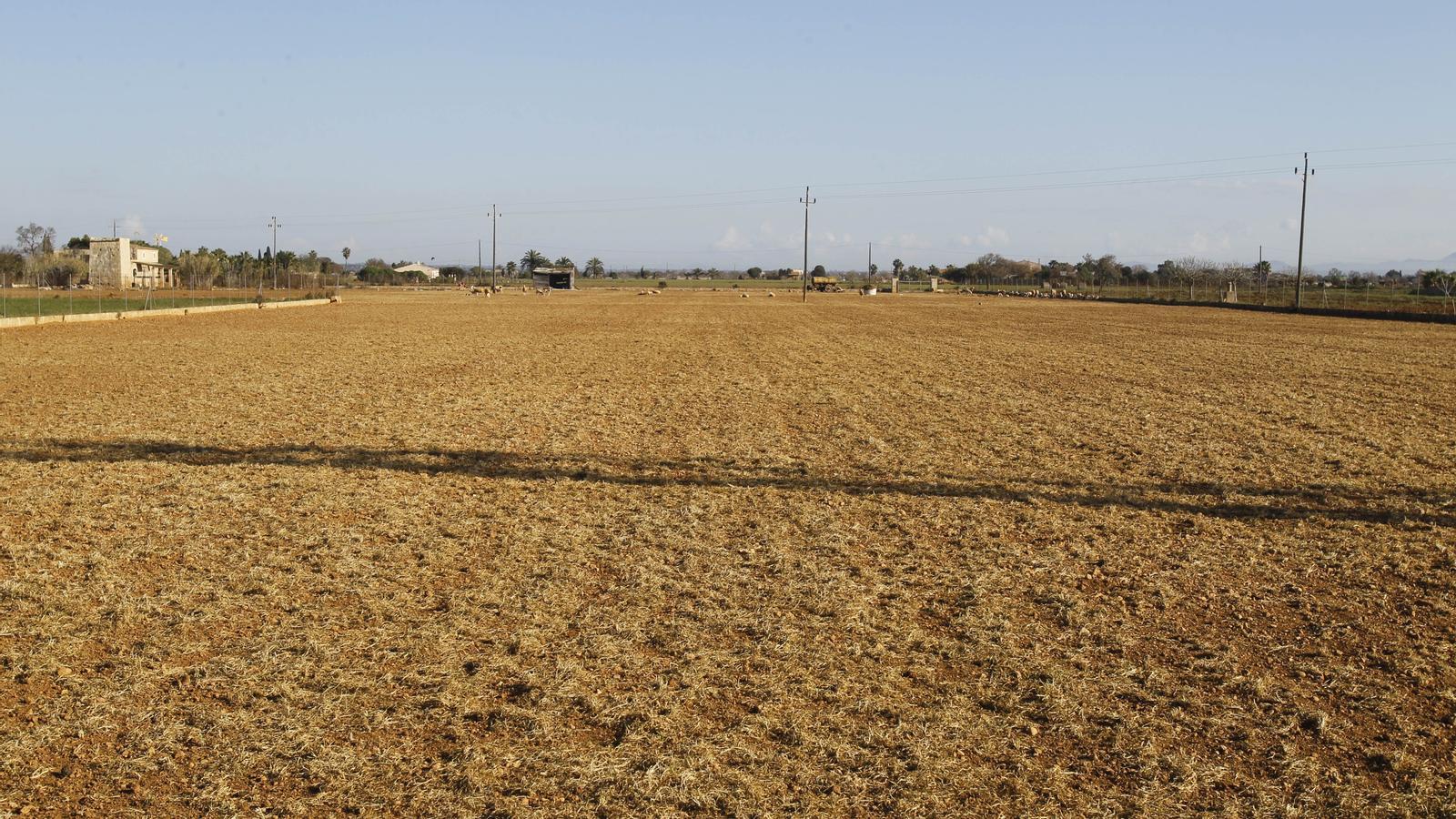
The lack of rainfall is one of the factors that mark this data, but evidently there is another, and that is the constant increase in population and tourists. Not only does it rain less often than a few years ago, but when it rains, it rains less, while the records for population and visitors do not stop. Of course, rains can always somewhat mask the lack of resources, but that has not been the case. June has been extraordinarily dry: in the Islands, only 0.3 liters per square meter have fallen, when the usual for this month is 16.5 liters. That is, 98% less precipitation than would be normal. This data explains a good part of the drop recorded during the last month, although it does not summarize the entire problem.
It is not a one-off episodeThe Government's concern goes beyond this isolated incident. Parliamentary responses consulted by ARA Balears to questions posed by MÉS per Mallorca deputy Maria Ramon show that a large part of the territory is already under surveillance. In April, 37 municipalities were in a state of water pre-alert and 10 more in alert, while only 20 municipalities remained in a normal situation. The Government insists that these scenarios "are defined by hydrological units and not strictly by municipalities", but the picture remains significant: a large part of the Islands faces the summer with resources under pressure.
The Executive also assumes that the problem is not limited to the lack of rainfall. In its parliamentary responses, it warns that climate change will make droughts longer, rainfall more irregular, and aquifer recharge more difficult. Calculations point to a reduction in water availability of 4.5% in the next decade if this trend continues.
This is the main underlying concern: while water demand continues to grow driven by population increase, tourism, and the construction of new homes, the major infrastructures that must reinforce the system will still take years to become fully operational.
