The lack of water in Menorca hits rock bottom
Reservations fall to 34%, the historic minimum, while the Government accelerates the connection of the Ciutadella desalination plant and seeks funding to install a modular one in Maó next summer

-
CAT -
CAST -
DE
CiutadellaWater reserves have hit rock bottom as never before in Menorca. The island ended the month of June with water reserves at only 34% of its capacity, the same situation it already had in August of last year. In the records of the Ministry of the Sea, such a low level has not been remembered for at least the last 10 years.
Beyond the historical series, the drop in the last month has been so pronounced (from 42% to 34%) that it has set off the alarm, even more so when last year —with a situation that was already worrying— reserves were up to 8 points higher in June.
The lack of water in Menorca is evident, especially if we compare it with the data from the other islands, which have reserves almost at half capacity: 47% in Ibiza and 46% in Mallorca, where the lowest record of the last ten years was marked in the summer of 2016 with 39%.
This means that, globally, aquifers in the Balearic Islands are now at 45%, only three points below June last year, when it was 48%. In fact, 80.4% of the Balearic territory is in a drought pre-alert situation. This is the case for Menorca and the units of Artà, Manacor-Felanitx, Migjorn, Palma-Alcúdia, Tramuntana Nord, and Ibiza. Only in Formentera and the southern part of Tramuntana is there normality.
According to the Ministry, the lack of rain is the main cause of this situation. The State Meteorological Agency (AEMET) has recorded an average rainfall of only 0.3 liters per square meter, while the usual is 16.5. Therefore, the water deficit compared to the climatic average has already reached 98%.
June has also been warmer than usual in the Islands. The average temperature has pushed thermometers up to an average of 24.5 degrees, 2.3 above what would be expected. It is the fourth warmest June in the Balearic Islands since 1961.
In this context, the Minister of the Sea, Juan Manuel Lafuente, and the Director General of Water Resources, Joan Calafat, met this Monday with representatives of the Consell de Menorca to assess the severe shortage affecting the island's aquifers and adopt initial solutions. The Ministry promises to maintain "constant monitoring," with "coordination and prudence."
Minister Juan Manuel Lafuete has shown his "concern" and has asked the population for prudence to reduce water consumption, although he said that, "according to the regulations, we are not yet in a situation where restrictions need to be applied. It rained quite a bit in winter, but it has stopped raining for a few months and, at the same time, consumption has increased. So, this scarce resource must be managed reasonably."
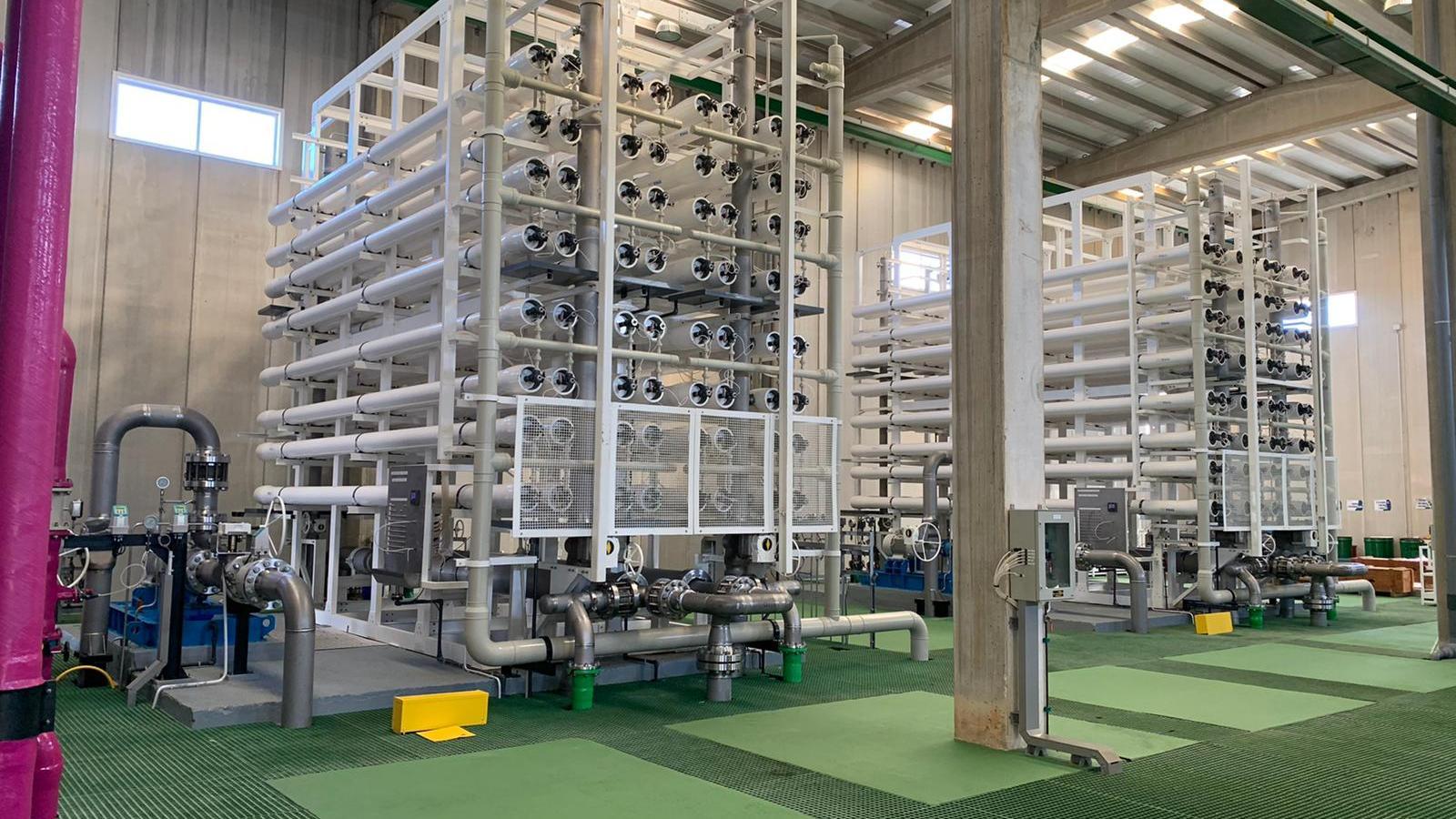
To achieve this, Lafuente has highlighted the various projects currently underway, such as the channeling and connection of the Ciutadella desalination plant, "in which we have invested more than one million euros," or the modular desalination plant that is planned to be installed in the Cala Figuera de Maó area next season. "It is urgent to have infrastructure to reduce pressure and ensure enough water for the population of Menorca," he said.
The President of the Council, Adolfo Vilafranca, has pledged to convene the Water Cycle Monitoring Commission this same week to take coordinated measures with all the town councils. "We come from eight years where investments have been nil and the island's needs have not been addressed," said Vilafranca, contrasting this with the actions taken during this term, such as the connection and expanded use of the Ciutadella desalination plant, the future Llevant desalination plant, and the water reuse plans implemented by municipalities like Es Migjorn Gran. "It is not a dramatic situation," said the president, "but it is sufficient to take measures." One will be the launch of a public awareness campaign.
Among other initiatives, the Water Monitoring Commission aims to harmonize municipal ordinances to penalize excessive consumption, promote efficiency in new constructions, and advance in leak detection and supply optimization.
Although Ciutadella accounts for 37.5% of Menorca's total water consumption, it is in Maó where the most restrictions have been implemented, even advanced last summer. For example, companies and establishments are prohibited from washing cars in the street, and individuals are not allowed to clean their boats or water their gardens. Cruise ships can no longer refill water at the port.
Data from the Menorca Socio-Environmental Observatory (Obsam) confirms that, far from decreasing, both water consumption and distribution through municipal networks are on the rise again on the island. This trend continues and 2025 marked the highest registration in Menorca in the last 20 years, 12,925,193 cubic meters, only surpassed by the 13,145,157 registered in 2006. Urban consumption, which accounts for just over half (6,894,407 cubic meters), is the highest in 20 years. In municipalities like Es Mercadal, for example, it has grown by 15% in just one year.
