From 48 lizards to only one: the emblematic species of Ibiza, in danger
A report from GEN-GOB warns of the regression of the Pitiusas wall lizard in three of the four areas studied in the Ses Salines natural park and demands more forceful measures against invasive snakes
-
CAT -
CAST -
DE
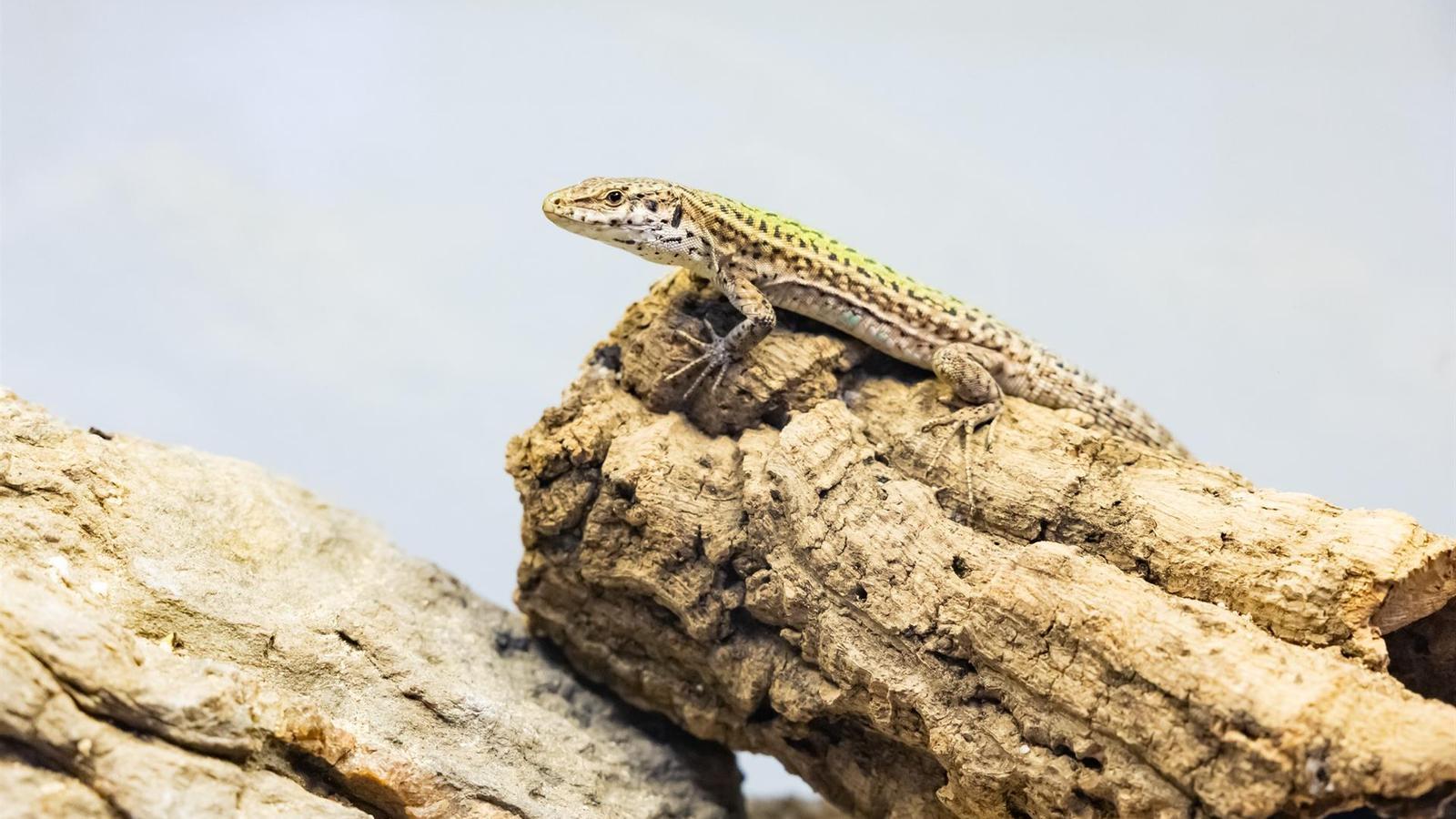
PalmaThe Pityusic wall lizard, one of the most emblematic species of the Pityusic Islands, continues in regression at the Ses Salines d'Eivissa Natural Park. The 2026 monitoring has detected an especially worrying situation at Es Codolar and the Torre des Carregador: in July, only one specimen was observed on each of the routes, when in 2024 up to 48 had been counted.
The monitoring report, prepared by GEN-GOB based on samplings carried out between April and July, warns of the risk of local extinctions in the short term if more forceful conservation measures are not adopted. The entity points out especially the pressure from invasive snakes, which threaten the survival of the species.

The Torre des Carregador, one of the most critical points
The situation is especially worrying at the Torre des Carregador, an area that concentrates one of the highest densities of snake captures in the entire natural park and which, at the same time, presents some of the most unfavorable results regarding the presence of lizards.
The Kilometric Abundance Index (IKA), which relates the maximum number of specimens detected to the length of the route, has stood this year at 6.57 specimens per kilometer. The figure is below the 7.89 recorded in 2025 and far from the values of 2024.

The monitoring, initiated in 2023 with the support of the beach concessionaires of Sant Josep de sa Talaia, analyzes four fixed transects: the Can Blai alley, Es Codolar, the Torre des Carregador, and Cap des Falcó. Visual censuses are carried out monthly during the summer months to compare the evolution of the populations.
The data confirm a downward trend since 2023 in three of the four areas studied, especially in Es Codolar and at the Torre des Carregador.
Cap des Falcó is the only area that is improving
The only positive data from the report comes from Cap des Falcó. In this location, the abundance index has gone from 3.96 specimens per kilometer in 2025 to 9.90 in 2026. This improvement suggests that there are still possibilities for recovery and the study proposes analyzing actions to strengthen the resilience of the population.
In the alley of Can Blai, on the other hand, this year no wall lizard has been detected in the section of the alley itself, although they have been observed at other points along the route. The report also highlights the repeated presence of feral cats in the nearby fields, another factor that harms the conservation of the species.
Faced with these results, the GEN-GOB demands firmer and more sustained actions to protect the Pityusic wall lizard, both in Ses Salines and in the rest of Ibiza. The entity defends that scientific monitoring must be maintained to verify whether snake control measures allow populations to recover or if the presence of wall lizards ends up becoming testimonial.
The report underlines that having continuous data is essential to guide conservation decisions and evaluate the effectiveness of the measures adopted. The detected regression reinforces the need to act to avoid possible local extinctions of this emblematic species of the Pityusic Islands.
