The Piolet d'Or that claims another way of doing mountaineering
Bru Busom, Marc Toralles and Rubén Sanmartín receive the highest international recognition of mountaineering for an ascent to the Yerupajá, in the Peruvian Andes

-
CAT -
CAST -
DE
PalmaCatalan mountaineering has made history. Bru Busom, Marc Toralles and Rubén Sanmartín have been awarded a Piolet d’Or, the most prestigious international recognition in mountaineering, for the opening of The essence of commitment, a new route on the east face of Yerupajá (6,634 meters), in the Peruvian Andes. It is the first award of this category granted to a Spanish ascent, a milestone that vindicates the exploration, autonomy and commitment of this route.
For Busom, the value of the award goes beyond the sporting achievement: “It is a recognition from our mountaineering community”. Toralles vindicates the motivation behind these expeditions. “We do not get paid to do these activities. We do it because it is what we like and love”, he says. The award recognizes both reaching the summit and the way of achieving it.
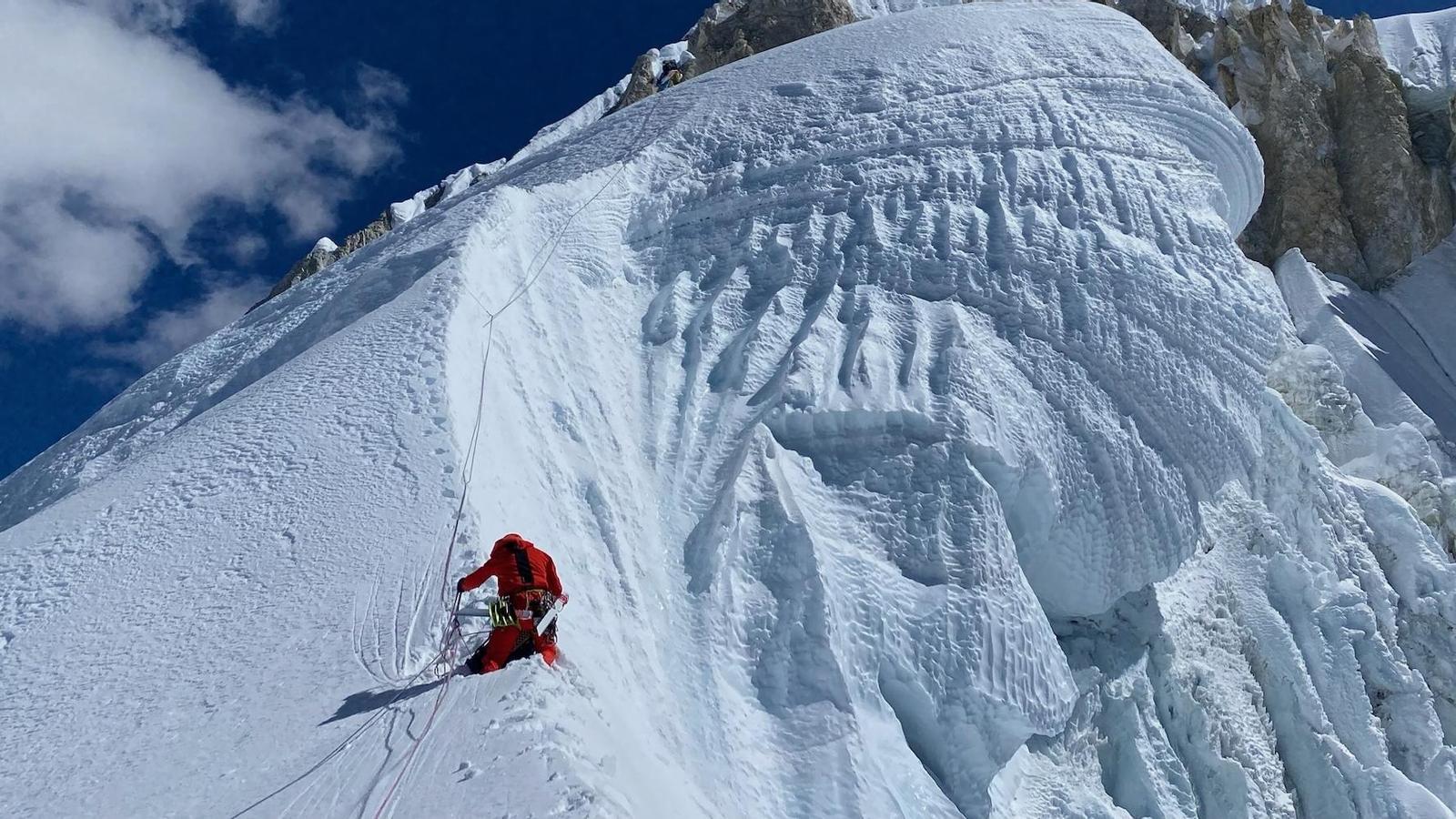
In August 2025, the three mountaineers completed the first integral traverse of Yerupajá via its east face. After opening a demanding route, they reached the main summit, traversed an exposed ridge to Yerupajá Sur, and descended via the southeast face. They did so in alpine style, that is, without fixed ropes, high-altitude camps, or external support. The jury highlighted its difficulty and the few options for retreat and rescue.
What does it mean to practice mountaineering in alpine style?
“Alpine style is autonomy: packing the backpack and heading up”, explains Busom. Toralles summarizes it with two words: “Uncertainty and adventure”. It is progressing with the essential equipment and taking responsibility for the decisions of the ascent.
This autonomy does not mean seeking danger, but rather preparing oneself and knowing one's limits. “The problem or risk arises when a mountaineer goes to places that are beyond their capabilities. That is very dangerous”, says Busom. Interpreting the mountain conditions and knowing when to turn back when necessary are also part of the activity.

For Toralles, the alpine style offers an experience that goes beyond technical difficulty. “It is a space of freedom, a space of tranquility, an experience”. The goal is to discover routes without giving up autonomy.
Another way to measure success
This philosophy contrasts with the commercial model of expeditions to some 8,000-meter peaks, with guides, fixed ropes, and large infrastructure. Busom does not question everyone's right to choose this option. “If people want to pay 80,000 euros and climb Everest, they have every right to do so.” He does defend, however, that it should not be the only way to value mountaineering.
Toralles is more critical of an activity in which the goal of reaching the summit "at any cost" can displace the adventure. “Those of us who want to maintain traditional mountaineering are forced to look for other mountains or routes to avoid a model in which you have to pay a fortune,” he laments.
Social networks have also changed the way milestones are recognized. Busom admits that they provide quick repercussions, but not everyone has to seek validation there. Toralles stays on the sidelines: “I don’t need to believe in this model or compete in it,” he says. In this context, the Piolet d’Or has a special value, because it is a recognition from the mountaineering community, beyond the repercussions on social networks.
From Yerupajá to the screen
The extreme experience of these climbers will also reach the public through mountain cinema. The essence of commitment, the documentary by Adrià Martínez about the ascent, will be screened at the Palma Mountain Film Fest on Tuesday, October 20th, at 7 p.m., at the Teatre Municipal Xesc Forteza (Palma). The session will include the participation of Marc Toralles, Bru Busom, Tomeu Rubí, and Cati Lladó. The film lasts 49 minutes and portrays an adventure of friendship, solitude, and overcoming limits.
For the three climbers, the award does not change the underlying reason for continuing to climb mountains. The milestone at Yerupajá proves that there is still room for exploration and new routes far from the most commercial itineraries. As Busom argues, the spirit of the alpine style can also return to the 8,000-meter peaks. “There will once again be climbers who return to these mountains with that enthusiasm for opening new routes, for discovering the uncertainty that comes with finding new itineraries and new challenges”.

