The Talaiotic heritage of Mallorca, in danger: this is how the collapse of Can Xim was avoided
A wild olive tree stump was threatening the stability of one of the talayots and had displaced stones from the structure, while the work has also allowed for the recovery of a section of prehistoric wall
-
CAT -
CAST -
DE
SencellesIn the Pla de Mallorca there is a heritage made of stones that keeps history alive. An example is the Can Xim site, in Sencelles, which is one of the most important testimonies of our Talayotic past. Although today the calm is only broken by school visits, a few months ago —during the intervention campaign last summer— the activity there was intense to achieve a priority objective: to guarantee the safety of its millenary structures and avoid the loss of an irreplaceable heritage.
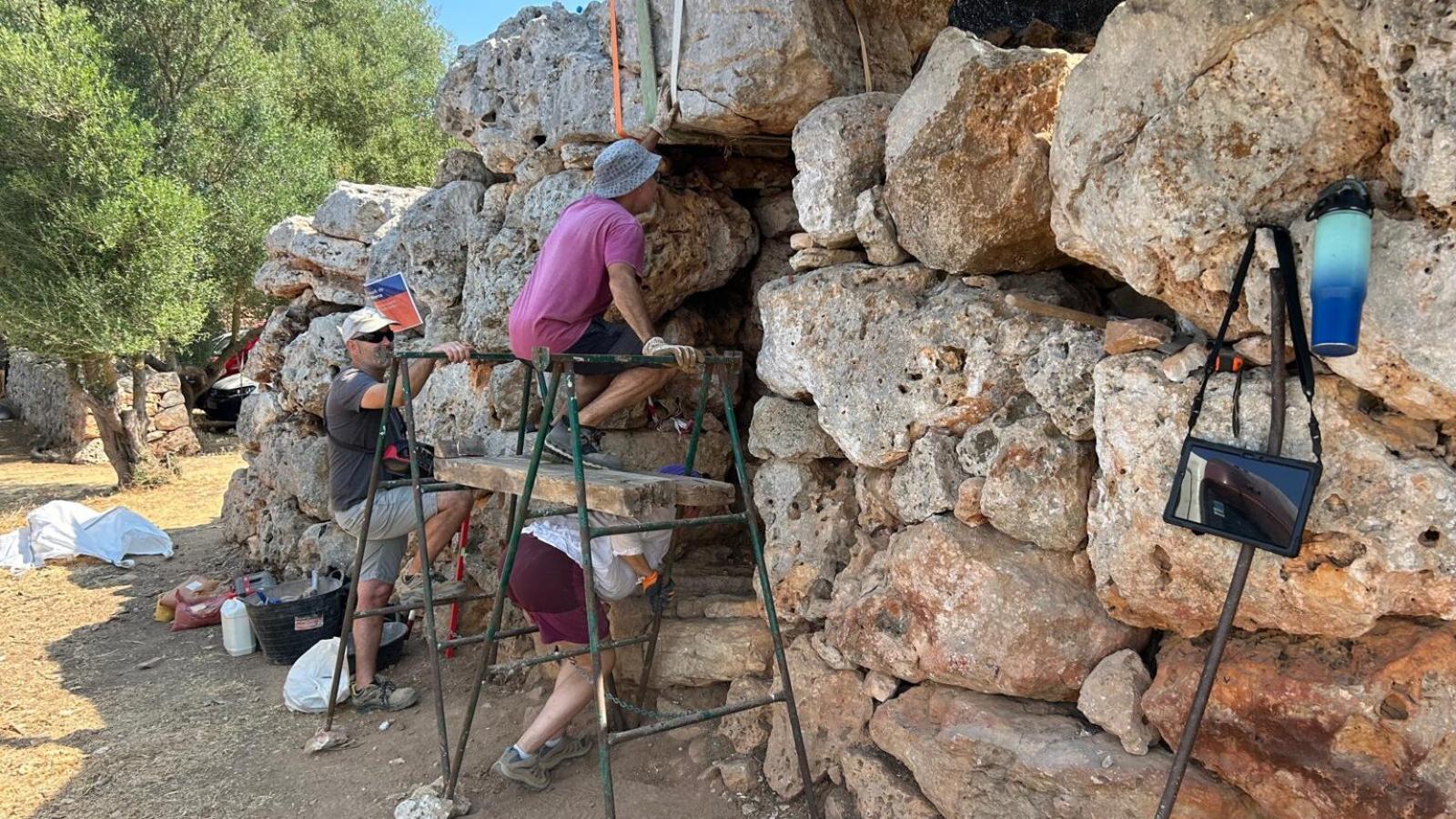
The main focus of the work of this last campaign was centered on Talaiot 1, the site's calling card and the first structure that the visitor discovers upon accessing the enclosure. The situation at this point was of extreme urgency: a large wild olive trunk had been growing in the southern half of the entrance, opening the wall and displacing three of the outer jambs of the corridor, look at the images above.

The natural pressure of the tree generated significant instability and a real risk of collapse. To mitigate the danger of landslides, the technical team carried out a meticulous intervention: the upper lintel and the jambs on the right side of the corridor were dismantled, the accumulated sediments were cleaned, and the stump was extracted. Subsequently, with maximum archaeological care, the original stone blocks were relocated and the empty space was refilled with new stone elements to definitively consolidate the structure.
Talaiot 2
In parallel, the work also covered the exterior of Talayot 2. In this sector, an intervention was carried out on a wall of large stone blocks attached to the prehistoric structure, which was interrupted by a modern dry-stone wall that delimited two enclosures of the estate.

In order to highlight these historical remains, about five meters of the modern wall were removed. This action has allowed not only to make visible, document, and stabilize the prehistoric wall to prevent collapses, but also to enable a new passage that improves the itinerary of the visitors who tour the site.
Route
The Can Xim talaiots have been part of the Sencelles-Costitx Archaeological Route since 2014, a reference itinerary for lovers of local history and culture. Permanently open to the public, these monuments have maintained uninterrupted restoration campaigns since 2020, demonstrating the firm commitment of the institutions to the conservation and dissemination of the heritage of the Pla de Mallorca.
The latest campaign was led by archaeologist Marc Ferré and restoration director Magdalena Escalas. Likewise, at the end of August, the site received a visit from heritage technicians Helena Inglada and Isabel Adrover, accompanied by the Sencelles City Council councillor, Joan Rigo, to see the results of the work firsthand.
This action has been possible thanks to the annual call for grants for the recovery of archaeological and paleontological spaces from the Insular Directorate of Heritage of the Council of Mallorca, in collaboration with the Sencelles City Council. A joint effort that ensures that the legacy of our predecessors from the Pla remains standing for future generations.
This latest intervention has been possible thanks to the annual call for grants for the recovery of archaeological and paleontological spaces from the Insular Directorate of Heritage of the Council of Mallorca, with the collaboration of the Sencelles City Council.
