From Newton to the greengage plum
Scientists are not the only ones who have left their name in the vocabulary: kings, artists, philosophers, military personnel, cooks and even landowners have also done so. The greengage plum, the boycott, the carpaccio and the guillotine are some examples of this.

PalmaThese days, when classes return, it is easy for ‘newtons’, ‘watts’, and ‘pascals’ to return as well. These are words that are part of the usual vocabulary of science and, being so well-known, they no longer seem like people's names to us. A newton is a unit of force; a watt, a unit of power, and a pascal, a unit of pressure. When we use them, we hardly think of Isaac Newton, James Watt, and Blaise Pascal.
Science, in fact, is full of them: there are also ‘joules’, ‘hertzs’, ‘amperes’, ‘volts’, and ‘decibels’, and instruments like the Geiger counter and the Richter scale. These are names that have gone from designating people to designating scientific units, devices, or concepts. However, if we put down the physics books, we will see that the matter goes much further.
The queen and the plum
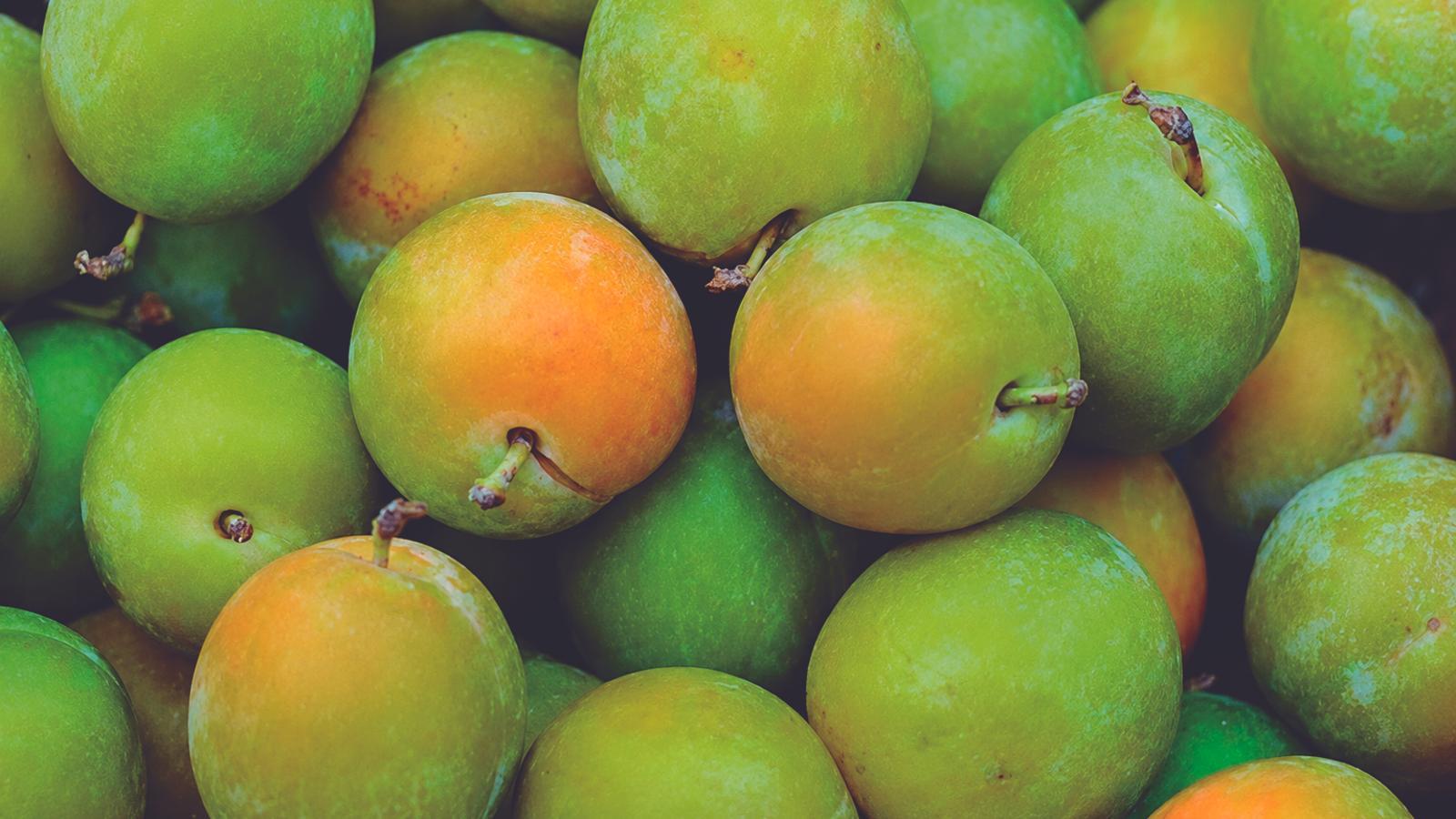
To find another eponym, you don't have to go very far. In fact, you just need to pass by a fruit shop. At the end of summer it is still plum season and, among the varieties we can find there, there is one that has a very particular name: the ‘claudia’. The name comes from Claude of France, wife of Francis I. The variety arrived in France from the Orient and became associated with the queen, to the point that in French it is called reine-claude’. Five centuries later, the queen and the plum share a name.
From the fruit shop we can go to the supermarket and, without changing the context much, find another eponym. If we stop buying a product because we do not agree with a company, for example, we can say that we are ‘boycotting’ it. The word ‘boycott’ comes from Charles Cunningham Boycott, an Irish land agent who in 1880 was the subject of an isolation campaign by farmers. His surname ended up becoming the name of this form of protest and today we can ‘boycott’ almost anything.
The story of Boycott also has an interesting peculiarity: his surname became a word with extraordinary speed. In a short time, ‘to boycott’ was already circulating in English with the meaning of isolating someone or refusing to have dealings with them, and from there it passed to other languages. It is not very common for a person to manage to enter a dictionary so quickly, and even less so for having been the subject of a protest.
If after going shopping we sit down to eat, we can still find more. A ‘carpaccio’ owes its name to Vittore Carpaccio, a Venetian painter of the 15th and 16th centuries. The dish of very thinly sliced meat was created much later, at Harry’s Bar in Venice, and it seems that Giuseppe Cipriani named it so because the color of the meat reminded him of the reddish tones of the artist's paintings.
The ‘béchamel’ also carries a surname. It is associated with Louis de Béchameil, Marquis of Nointel and financier of the court of Louis XIV, although he was probably not the one who invented the sauce. We can verify, therefore, that an eponym is not always the name of the person who invented what it designates: sometimes it is the person who popularized it, who was related to it, or who, for one reason or another, ended up giving their name to the thing.
Language can also turn a proper noun into an adjective. ‘Platonic’ comes from Plato; ‘Kafkaesque’ from Kafka; ‘Draconian’ comes from Draco, the Athenian legislator famous for the harshness of his laws, and ‘pantagruelian’ comes to us from Pantagruel, the character created by François Rabelais. When we say that a situation is Kafkaesque or that a banquet is pantagruelian, however, we are no longer talking about Kafka or Pantagruel, but rather using their names to describe a situation, an atmosphere, or certain dimensions.
There are some that are even easier to overlook. ‘Barem’ (reckoning/scale), for example, comes from the lineage of the French mathematician François Barrême, known for his books of calculations and numerical tables. ‘Benjamin’ is the youngest member of a group, like Benjamin, the youngest son of Jacob in the Bible. And ‘cicerone’, which today we can use to refer to a person who acts as a guide, comes from the name of Cicero, the Roman orator, because of his fame as an eloquent man.
In fact, there are so many eponyms that, when we start looking for them, it is difficult not to find them. We can go from physics to the greengrocer's, from the greengrocer's to the supermarket, from the supermarket to the restaurant, from the wardrobe to literature, and from literature to politics, and at every step we can come across someone who has left their name in a word.
Obviously, we do not need to know the origin of these words to use them. A watt works perfectly as a unit of power even if we do not know who James Watt was; we can boycott a company without ever having heard of Charles Boycott, and we can eat a greengage plum without knowing that its name leads us to a French queen.
Scientific terms
However, now that books, classes, and technical terms are returning, it might be a good time to take notice. ‘Newton’, ‘watt’, ‘pascal’, and ‘hertz’ show us that scientific terminology is full of lineages, but one only needs to step out of the classroom a little to find many more. And if these days we are still buying a greengage plum, we have a handy example to remember that an eponym can also taste like the end of summer.
