The policy of blocs in front of what everyone understands as a plebiscite

-
CAT -
CAST -
DE
Political parties understand that the general elections on November 29th are above all a plebiscite. The polarization being experienced by society between those who are against Pedro Sánchez's policies and those who are either in favor of them or consider them the lesser evil, is the same polarization that will be reflected at the polls. Rather than a debate between projects, the campaign is framed as a struggle between two blocs aspiring to gather enough strength to govern.
In this logic, ideological differences take a back seat. The PP and Vox have made a pact in the Senate: Vox will not present a candidacy in the Islands, and the PP will incorporate a candidate from Abascal's party in a prominent position. On the left, the PSIB, Ara Més, and Front Ampli have sought formulas to avoid the dispersal of the vote. In the Congress, Ara Més-Front Ampli incorporates Podemos; in the Senate, progressive forces have agreed on joint lists to dispute the majority from the right. Reaching a pact in the Senate is not a minor matter, as it is the chamber of territorial representation: it participates in the review of laws, amends texts sent to it by the Congress, and controls government action. It also intervenes in the application of Article 155 and in the appointment of members of constitutional bodies. For this reason, the parties do not want to leave its control in the hands of a conservative majority, much less an ultra-conservative one.
The sum of the left responds, above all, to the desire to prevent the PP and Vox from expanding their institutional power, rather than an unreserved endorsement of Sánchez. But this operation has a price. Without going any further, Ara Més, a sovereignist force, shares a strategy with statewide and centralist parties. It does so because it considers that fragmentation would be more harmful than renouncing part of its uniqueness.
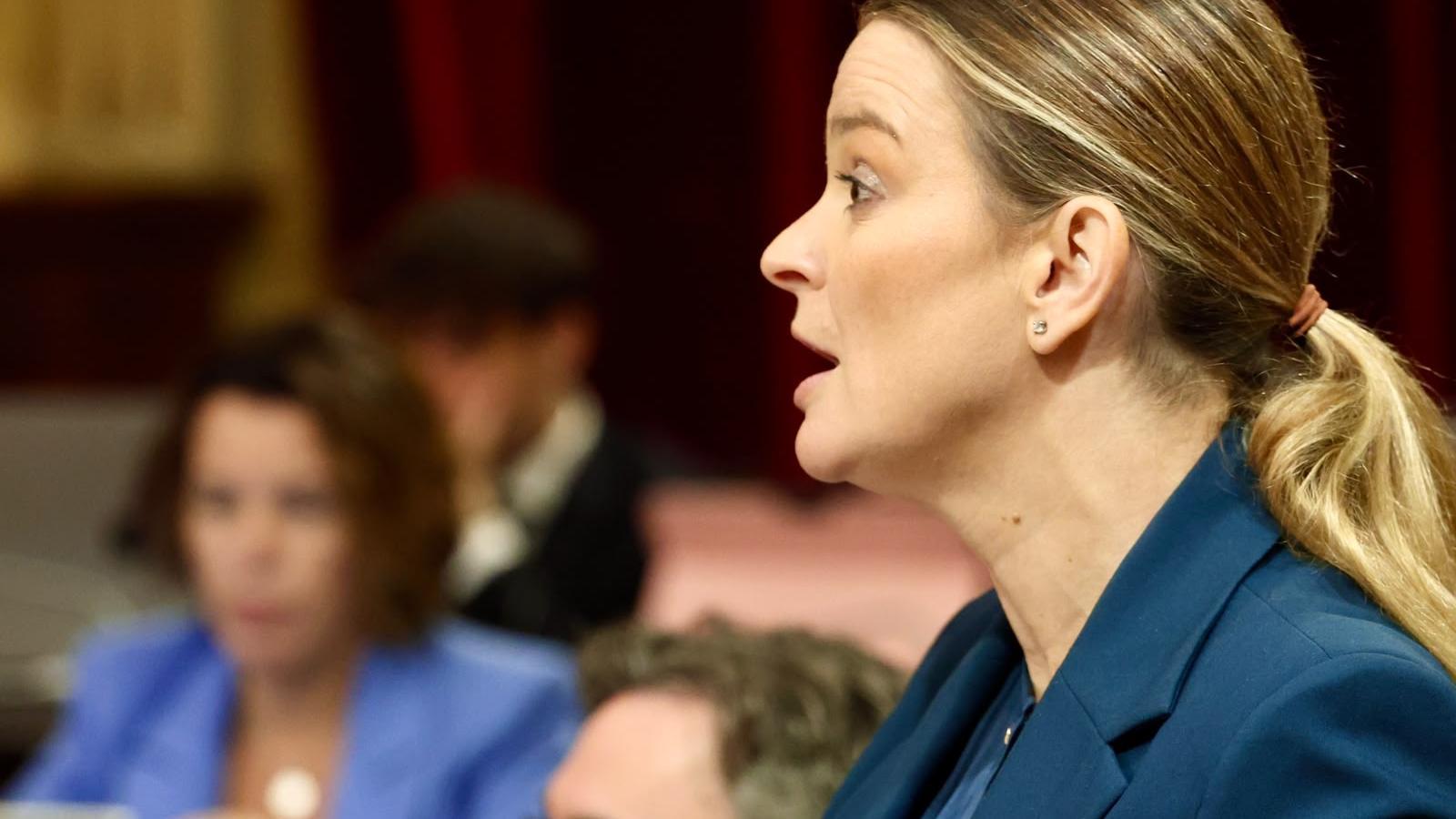
On the right, the contradiction is especially uncomfortable for the PP. Marga Prohens has tried throughout the legislature to keep Vox at a certain distance and present her Government as moderate. Now, however, the PP is aligning itself with a group that questions the rights of LGTBI people and denies sexist violence and climate change. It also defends a standardizing conception of the State and the language, contrary to the regionalist tradition of the Balearic PP. This is no small matter for the party that passed two laws such as the Natural Spaces Act (1991) and the Linguistic Normalization Act (1986), laws that Vox would repeal if it could.

In any case, these are pacts forced by circumstances and electoral arithmetic. Each bloc sees a necessity in it: the left, to stop the right and the far right; the PP, to get closer to a majority that allows it to return to the State government. But when tactics relegate foundational principles, parties must explain what they gain and what they are willing to lose. Because on November 29th, not only will who should govern be voted on, but also what political price one is willing to pay to reach power.
