Sr. À: “Ibiza is the only territory of the Catalan Countries to which its name in Catalan is still denied”
Rapper

-
CAT -
CAST -
DE
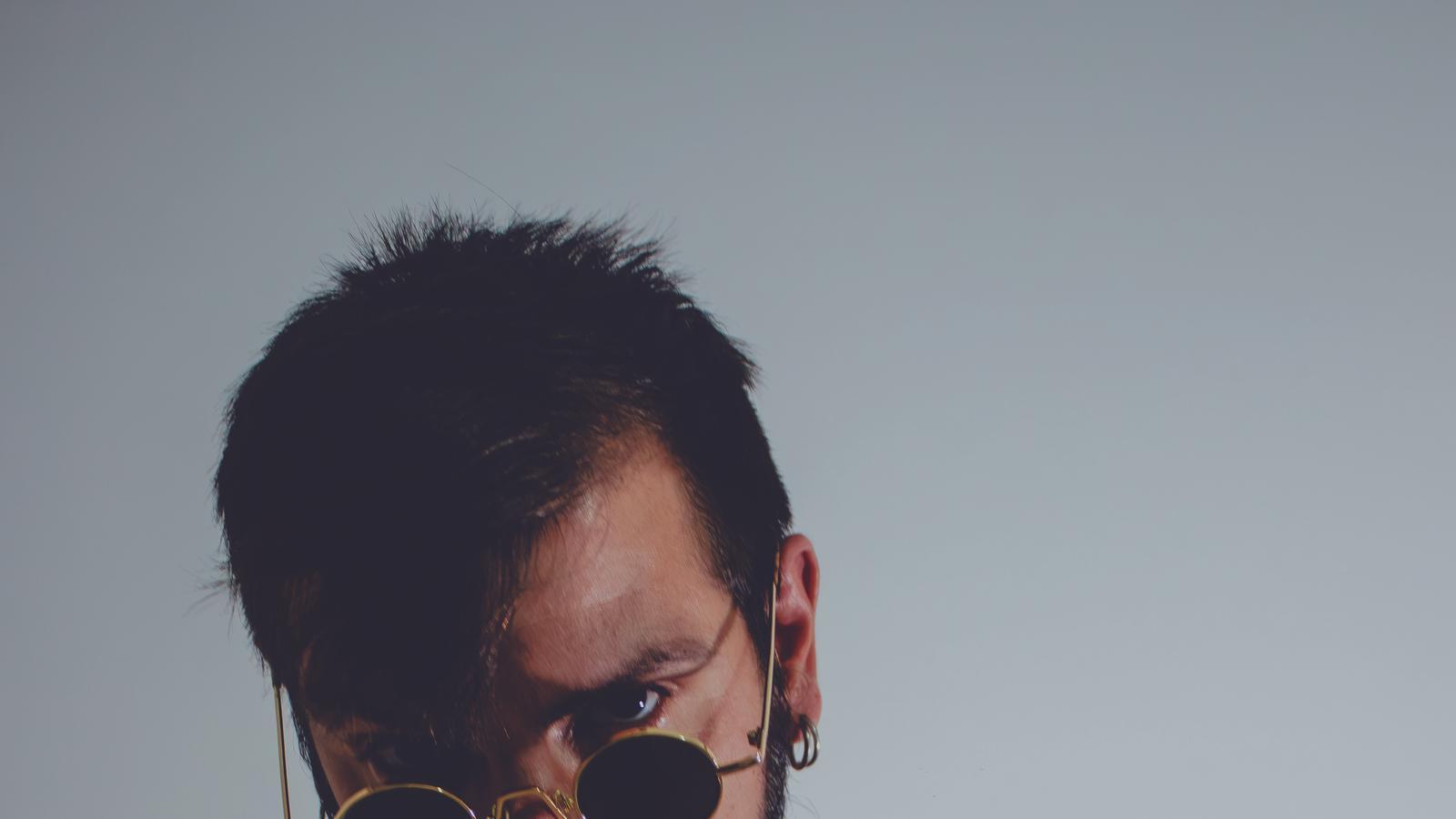
IbizaMecagondéu is the third album by Sr. À, after Fil per randa (2019) and Ordint la trama (2016). Sr. À is the stage name of Adrià Rubio, born in Barcelona 31 years ago, an Ibizan by adoption since he was 14; he currently resides in Camarasa (La Noguera), because it “hurts him a lot what is being done to Ibiza”. Precisely, the first single of the album has been ‘E.I.V.I.S.S.A.’, an invective against the social and environmental degradation of the island. In Mecagondéu, Sr. À combines poignant lyrics and rap with a classic air, with production by Jove Cirurgià del Sample, who has introduced fragments of sardanes or redoblat singing. Sr. À is also the singer of the band Malaka, is a social integrator by profession, and a restorer of peasant chairs. If you are fed up with pop without ideological substance, Mecagondéu is just what you were expecting.
‘À’ for what?
— About Adrià. When I arrived in Ibiza, Adrià was not a very common name; I went to the Santa Maria high school, in Vila, where many people were Spanish-speaking, and who, since they did not know how to pronounce Adrià, called me Adrián, and that annoyed me; so I made them call me Mr. À. ‘À’, with an open accent.
And ‘sir’, furthermore...
— It is a bit parodic. A gentleman of very relative elegance, because in reality we are a bit punky.
Do you think rap and punk have a connection?
— Yes, because they are musics that come from an urban environment, they are born from a spirit of protest, and even more so the hardcore rap that we make, which is very shouted, very direct, very vindicative.
In the first track of the album, the song 'Barbaritats', you managed to rhyme Juancar and BlaBlaCar, while talking about the sexual habits of the emeritus king. Are you not afraid of legal problems?
— Let's see, there was a rapper in Ibiza, Siker, who I think is no longer active; when he was 14, the National Police knocked on his door; he was a very communist guy, along the lines of Pablo Hasél. I am of a slightly less pamphleteering style, I use a bit more metaphors; even as a child I made the decision not to be so direct, because I want to continue singing; I try to have a balance, taking care of form and content in equal parts, but positioning myself totally.
Which comes first, rap or politics?
— Rap came to me first; it hooked me when I was very young, I used to rap in the street, in Vila, in Sant Antoni... I listened to various groups, I started to pull at the thread... And from there came my political commitment. I was deeply struck by the 1st of October, the referendum, and the subsequent sentences. Furthermore, I feel very involved in anti-sexism and anarchism.
You have been living in Catalonia for some time, but you chose ‘E.I.V.I.S.S.A.’ as a single. Why?
— It is the song that best represents me in terms of musical style, and I think it was very important, because when I returned to live in Ibiza, I collided very hard with the social reality, both the socioeconomic situation and the language. Ibiza is the only territory of the Catalan Countries to which the name in Catalan is still denied; furthermore, the name ‘Ibiza’ is associated with a predatory model that not only tears away our language and culture and makes it die, but also gives wings to a socioeconomic model that preys on the territory, causes the exile of working people, and maintains deficient public services. The song is born from frustration. I returned just as the pandemic was ending, we were in the ‘now we will change everything’ mindset, and what happened is that everything got worse, with prices even more sky-high. This song is a great grief, because I love Ibiza very much, but I cannot live there, because it hurts me a lot what is being done to it. ‘E.I.V.I.S.S.A.’ is pure rage at the situation in which the island finds itself.
How was the album made?
— I made it with Cirurgià del Sample, who is the main producer, which is why his name is also in the title; we mix Catalan music with rap, sardanas, and redoblat singing; I do a shout that I also do live.
You define your style as peasant rap; it is a bit contradictory, in a music with such urban roots.
— Yes, because I was born in the city, but I lived in the countryside right away, and I like living in the countryside much more; I really like building community, smaller and closer, more united. The concept of rural rap responds to the fact that quality rap can be made, without folklorizing what is rural, and it is also anti-centralist. Barcelona is obviously the epicenter of rap in Catalan, but we are committed to having rap further afield. This is how we have planned the tour: we have been in Olesa; on the 26th we are in Esporles, in Mallorca; then we will go to Ibiza, on October 30th; in Sort, Reus, Mataró, Girona, Lleida, we will return to Barcelona. But we want to tour as much as possible outside of Barcelona.
What is the current state of rap in Catalan?
— Great, better than ever. Part of returning to Catalonia was also for this; I got motivated again, I saw that there were many people who had listened to what I had done. We have rap battles in Catalan on a stratospheric scale, it's amazing. My main goal was to contribute to having a rap scene in Catalan, and we have achieved it.
Mecagondéu is a very direct title.
— It is an expression that is very typical of where I live now; in Lleida, ‘mecagondéu’ is said everywhere. And it is precisely the title of the first single by the gypsy from Balaguer, who is a gypsy punk singer-songwriter, and who left a great mark on me. And because we live in an era where mysticism seems to be on the rise, and it is a cry against that and in favor of heresy, empiricism, and the skepticism that characterizes me.
What other projects do you have?
— What I have decided is to join forces with another rapper, Ainhara, who participates in the Catalunya Freestyle and is from Lleida. We connected a lot and she is going to release her album. What we have decided is to form a group, with a view to releasing a work together next year. We both come from a rural perspective, man and woman, very politically positioned.
Do you already have a title?
— Yes. Poets of the district.
