Rudymentari: "Making music in Menorcan in Menorca can be a very powerful tool"
The Menorcan presents his third album, ‘Mala hierba siempre crece’, at the Cool Days festival in Artà
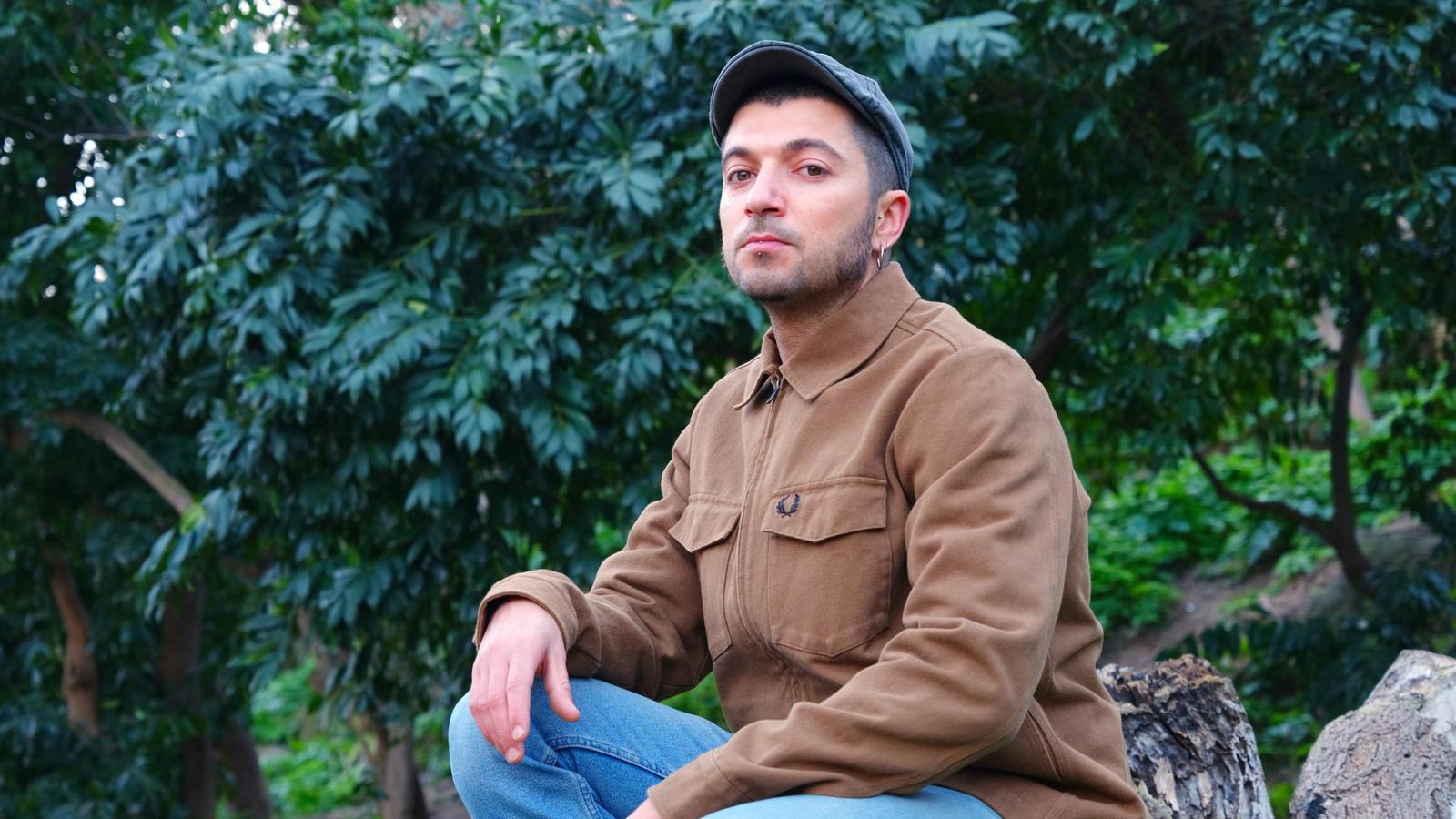

PalmGuillem Llorens (Ciutadella, 1993) says that when he started thinking about shaping his own musical project, he wanted the name to reflect his intentions: it was a humble and simple project, connected to his origins and to the rural life of Menorca, but it also had to connect with the musical movements that influenced him aesthetically, especially reggae. “That’s why I chose the adjective 'rudimentari', which I found defined it perfectly, and I changed the first 'i' to a 'y', which connects me with the rude boys of Jamaica, a social movement that also has an important musical component,” he explains. The last thing he expected at that time, however, was that the first song he would release as Rudymentari would suddenly become an anthem for thousands of people. The song, 'Som', has accumulated more than 750,000 streams on Spotify and reflects, like the project's name, the author's intentions. “We are non-existent, lost by the current, / pirates on the high seas, adrift and against the wind. [...] We are sailors, we are peasants, incandescent poetry. / We are a song without end, / an unfinished gloss / that speaks of a past, a future, and a present”.
Seven years later, Rudymentari has released three discographic works and has become one of the reference Menorcan musicians, both on and off the island. It is, in fact, one of the most listened to on the platforms. “We have an impressive musical richness in Menorca,” he shares, “and the Menorcan will to make music is admirable. This artistic vein has now re-emerged with great force, because, since Ja t’ho diré, we had seen many groups born, but they didn't always manage to overcome the label of emerging. And now we see that there are many projects with great quality, and they should be admired and cared for. Making music in Menorcan in Menorca is a tool that can be very powerful for the problems we have. It is very important to have music that reminds us of our real situation, be it with the style and themes that each one considers”.
And he has done so in all his works. The most recent is the album Mala hierba siempre crece, which he will present this Saturday, May 9, in Artà within the framework of the Cool Days festival. Released in February, it includes songs like 'Ca la Rata'. “They have the sea within two spans, / but they will build a pool / they don't want to find vultures / nor any neighbor. / They don't want hungry people, / only full wallets, / they want to lick asses, / that are not dirty with sand”, says the singer, who is also the author of the lyrics. “All of us who collaborate on the project, which includes people like Quim Simó, who is the saxophonist and also the producer, agree on the message we want to convey, although I am the one who writes it and the one who sings. The objective is to reclaim our roots and values, and give them diffusion through music”, explains Llorens, who does not hesitate to point out some of the main problems that currently affect the island where he was born and raised.
“We see how the Islands are transforming at a frenetic pace that accelerates every year. And when we approach a limit, when it seems we are reaching the end, we overcome it, be it for one thing or another. From the housing crisis to the boom in tourist platforms, the situation has become unbearable. And in Menorca we now have this phenomenon of buying farmhouses and converting them into rural hotels, which not only creates even more touristified spaces but also threatens the survival of the countryside. One thing is to transform to not die and another is to get used to the arrival of owners who do not buy one place, they buy 4 or 5 or 8. That a man in Madrid owns 3% of the island's properties is very strong, it should not be allowed”. Faced with this, the singer and lyricist of Rudymentari wants to believe that music can be “a tool for social transformation”. “It sounds very nice to say it like that”, he reflects, “but the truth is that I cannot say that it serves to transform. I do know that it gives you tools to reflect, which is already a lot. At least I experienced it that way during my adolescence, when my musical references were what helped me to think and form my own ideas”.
Among all these references, he is clear that the one that has left a more significant mark on his trajectory, both personal and vital, has been Fermín Muguruza. “I liked many punk bands with critical, explicit, and demanding messages, but Fermín Muguruza is the one who has influenced me the most. For his musical taste, but also for the way he conveys messages. He is the benchmark par excellence”. And among all the messages that Rudymentari's new album conveys, one of the most critical, explicit, and demanding, as he says, is the one from the work's title itself: Bad weeds always grow. “It has a double meaning, because we took a year-long break from the stage, and this title was a way of saying that we were coming back, that we were still here. But it also has a collective perspective, with the will to send a message of hope. At a time of the rise of the far-right, with such a tense political landscape also internationally, we must remember that there is hope. That in the worst moments bad weeds regrow: this message of resistance I believe is more necessary than ever,” he assures.
