Delays, errors and bureaucratic obstacles complicate the extraordinary regularization of migrants
The legal team of OMIMED warns that there are applicants who still do not have the provisional authorization months after submitting it and that some, despite having a favorable resolution, cannot obtain the foreigner's identity card

-
CAT -
DE
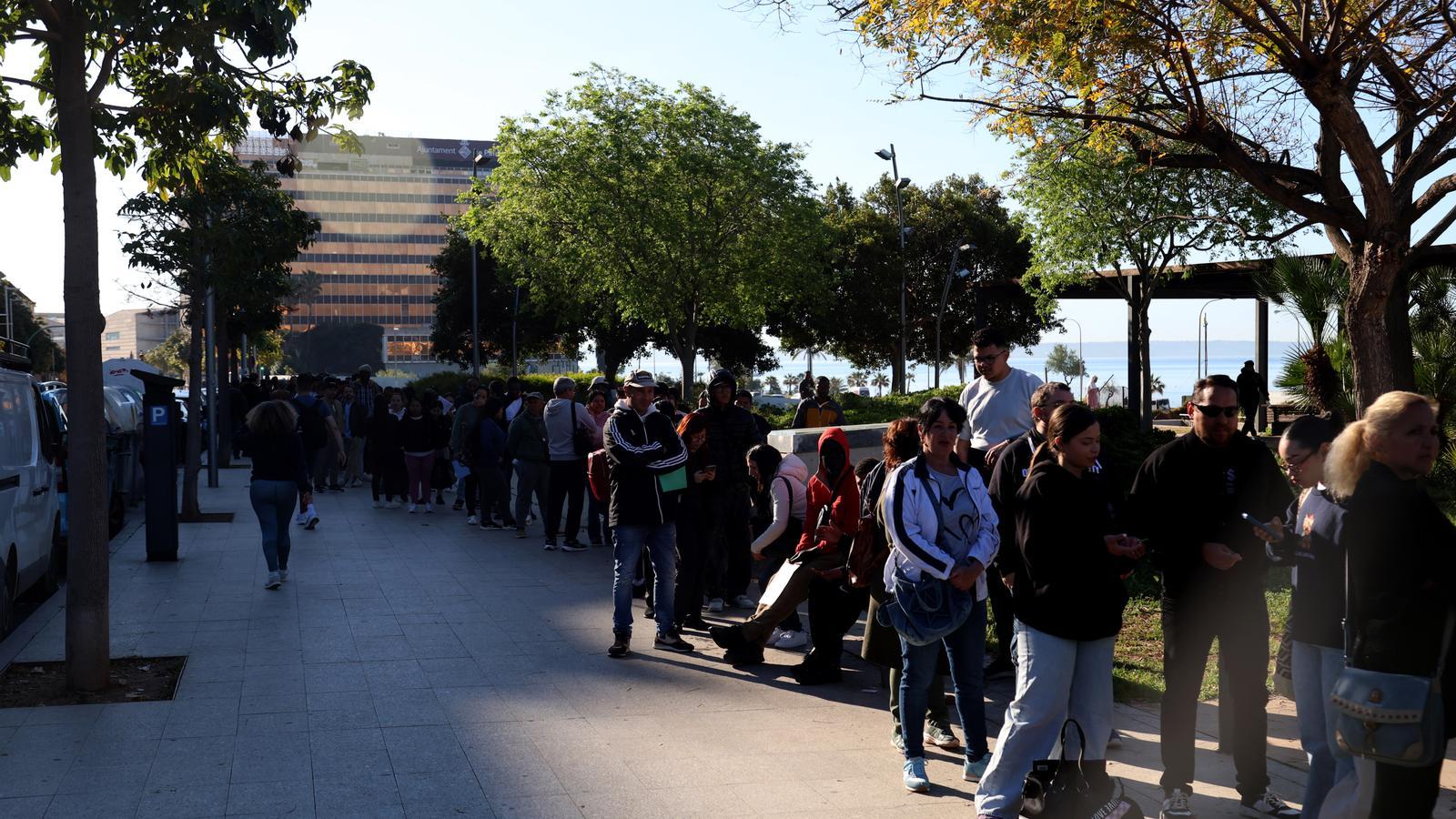
PalmaThe extraordinary regularization of foreign nationals, initiated last April, is already starting to yield results, but the procedure still presents numerous deficiencies. Delays in processing, errors in personal data, alerts from the Schengen Information System (SIS), and difficulties in obtaining the Foreigner Identity Card (TIE) are some of the obstacles detected by legal professionals. These incidents can lead to people with applications submitted under similar conditions ending up in very different administrative situations.
This is stated by lawyer Carmen Serra, a member of the team of jurists at the Mediterranean Migration Observatory, in a report that analyzes the problems of the process and proposes measures to improve it. According to Serra, the regularization has allowed many people to be incorporated into administrative and labor legality, but the volume of applications has also highlighted shortcomings in capacity, coordination between agencies, and data control.
Delays affect access to employment
One of the main problems is the wait between the submission of the application, the registration of the file, and the notification of admission for processing. This last communication is especially important because it allows provisional access to the labor market while the processing continues. Therefore, the delay is not just bureaucratic: it can prevent a person from starting to work and advancing toward a situation of stability in Spain.

According to the professional experience gathered by Serra, at the beginning of October there were still files submitted in the first days of the procedure that had not received provisional authorization. The lawyer estimates that 30% of the files she has analyzed were in this situation, although she specifies that it is an estimate based on cases known professionally and not a representative statistic for the whole State.
The lack of detailed public data makes it impossible to know the real extent of the problem, the causes of the delays, and the nationalities most affected. Furthermore, there are more recent applications that have already been resolved, while others from earlier dates remain stuck in the first phases, without the interested parties clearly knowing the reason.
European alerts can prolong the processing
Another obstacle is the alerts in the Schengen Information System introduced by other member states, often linked to entry or stay bans. These cases may require additional checks to determine if the ban is still in force, what its cause is, or if the data is still correct.
The report warns that some alerts may remain active even if the resolution that originated them has been revoked or has lost effectiveness, due to update errors or a lack of coordination between authorities. However, their existence should not automatically lead to a denial of regularization.
Serra recalls that these cases must be analyzed in accordance with European regulations and the circumstances of each person. When Spain intends to grant a residence authorization to someone for whom another member state maintains an alert, it is necessary to consult the state that introduced it, assess the reasons for the ban, and give the interested party a hearing so they can present allegations.
These checks can prolong the procedure. For this reason, the lawyer argues that IT incidents should be differentiated from legal consequences and that an administrative infraction linked to an irregular stay in another state should not automatically exclude a person from the process, especially if they have established roots in Spain, have minor children in their care, or suffer from a serious illness.
A favorable resolution without an identity card
The difficulties do not disappear either when the Administration grants the residence authorization. The report gathers cases in which errors in names, surnames, affiliation, or identification documents prevent obtaining the TIE, which provides documentary proof of the granted authorization.
Some incidents are only detected when the person goes to the Police to have their fingerprints taken. The data in the resolution may not have been correctly incorporated into police systems or may not match those in the passport and other databases. Thus, a person may have a favorable resolution and, despite this, not complete the documentation until the errors are corrected. Serra attributes part of the problem to the lack of agile communication channels between Immigration offices and police stations, which ends up shifting to the applicants the responsibility of solving mistakes they have not committed.
Added to these incidents are the difficulties in getting an appointment for fingerprinting, the differences between police stations regarding the required documentation, and problems related to registration, fees, and affiliation. The lack of the physical card can also complicate daily tasks with administrations, employers, or banking entities, such as opening an account or providing documentary proof of administrative status. The report thus highlights the distance between having a recognized right and being able to exercise it normally.
The lack of coordination places the burden of the problem on the applicants
For Serra, many of these incidents have a common origin: the fragmentation of the procedure. Immigration processes and resolves authorizations; the Police issue documentation; Social Security intervenes in certain labor procedures, and other institutions participate in background checks and international consultations.
When these agencies do not share information in an agile manner, the interested parties must provide documents that another administration already has, correct errors, or wait for different departments to coordinate actions. Furthermore, the lack of homogeneous criteria can mean that similar situations receive different responses depending on the office managing them, with the consequent legal uncertainty.
Faced with this situation, the report proposes better identifying files pending registration, reporting more clearly on the causes of stagnation, and establishing rapid mechanisms to correct errors. It also calls for improving the coordination of consultations linked to the Schengen Information System and unifying the criteria for issuing the TIE.
For Serra, the challenge is not only to resolve the applications, but to ensure that all phases—from submission to provisional authorization, final resolution, and card issuance—function as a single coherent procedure. Regularization must allow people who meet the requirements to access a regular administrative status, without the internal deficiencies of the Administration becoming an added burden for the applicants.
