"Hotel rooms are like Kinder eggs"
After 28 years working in the hotel industry, the president of Unió Kellys Balears, Sara del Mar, explains what she finds behind every door and denounces that a large part of hotel profits comes from the health of the chambermaids.

-
CAT -
CAST -
DE
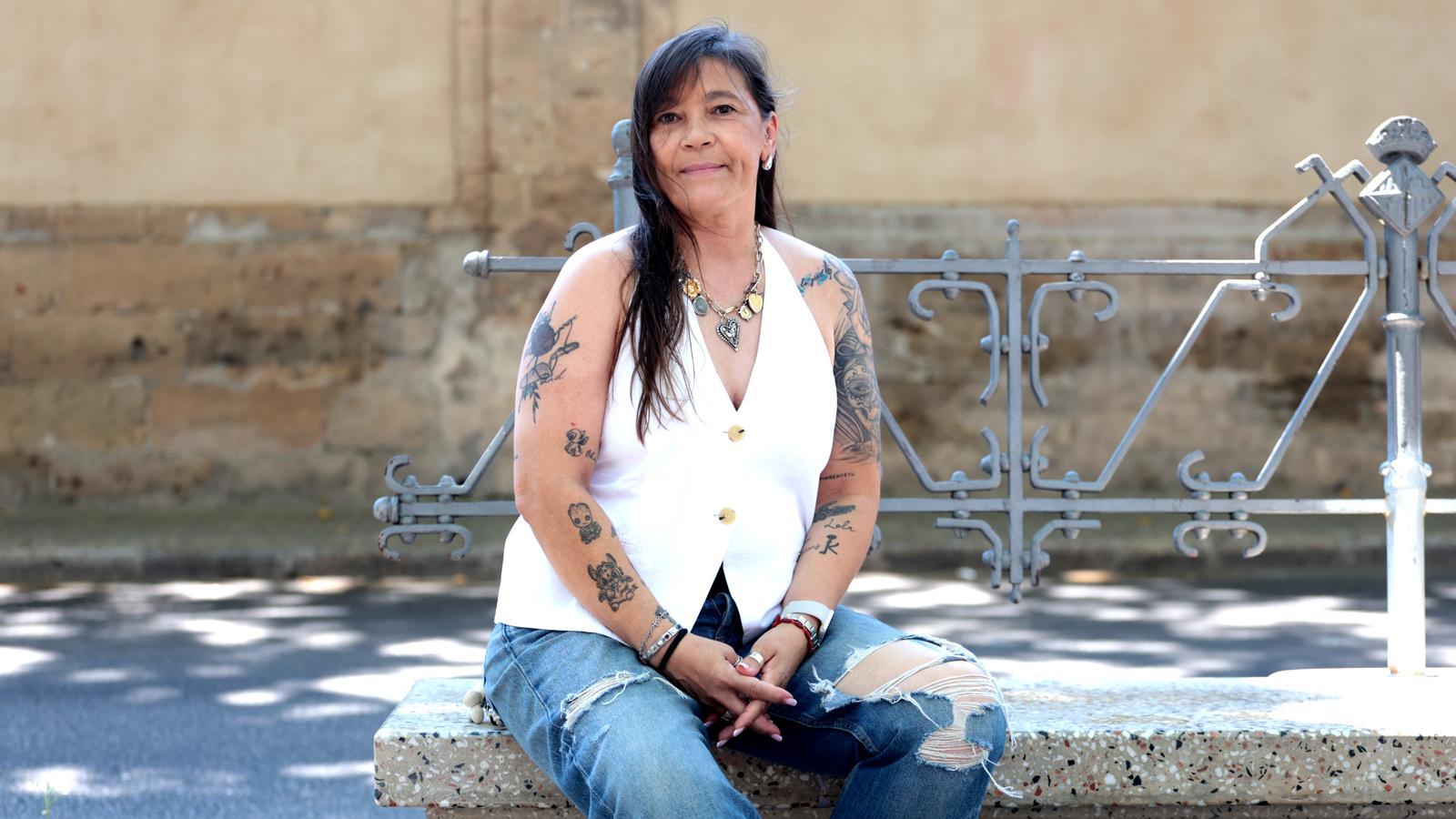
PalmaSara del Mar (Las Cabezas de San Juan, Seville, 1970) leaves a meeting at the UGT headquarters in Palma wearing a red t-shirt in defense of hospitality rights. She takes it off with an energetic gesture that makes her hair flow. She doesn't mind the clinging heat. She asks, decisively, where she should stand for the photographs while she adjusts her hair. Her bare back reveals tattoos all over her skin. On her left arm, a bricklayer's trowel and a ball of yarn with two knitting needles stand out. “My parents were always very hardworking, all their lives in the fields. They were illiterate and, as adults, they went to adult schools to get their basic education. My mother said she didn't want to have to sign with a cross. My father worked as a bricklayer and she has always loved sewing. She makes beautiful little baby dresses. She has incredible hands.”
The president of the Kellys in the Balearic Islands grew up surrounded by cotton, beet, and sunflower fields. She was a good girl and a bad student. “My father went to the high school to ask about me and the tutor told him she didn't know me. He couldn't believe it, because he saw me take the bus every morning. The teacher told him: ‘Yes, she must take the bus, but she doesn't come here’.” She never thought about what she wanted to be when she grew up. She studied one year of Agrarian studies, started a vocational training course in Electricity, and that didn't work out either. “When I was about 12 years old, my father would take us, the siblings, out of school, and we would pick cotton for two or three weeks. It was the 80s. Protected childhood did not exist. Today it would be considered child labor, but at that time it was normal.”
Fleeing the countryside
The scratches on her hands and the hardness of the work made her flee from the countryside. At 16, she started working as a live-in maid at the home of some wealthy Sevillian gentlemen. At 22, she returned to the village, painted curbs and municipal sports facilities. “Wherever they sent me, I went.” She got married and ended up in Mallorca, encouraged by two brothers who had already settled there. “They ended up leaving and I stayed. I got divorced and I have spent my whole life here. When I arrived, everything seemed precious to me. The villages where I come from are fields and more fields. If there are no crops, there is only land as far as the eye can see, under an impressive heat.”
After two weeks, she already had a contract at a hotel in Magaluf. She has been working in the hotel industry for 28 years –23 at the same hotel–, with a single break of a few months when her only daughter was born. She does not remember the first room she did, but she does remember the ‘Fordist’ rhythm. “The speed shocked me. I came from working as a live-in maid and I cleaned as if it were my own house. A hotel is a different story, but you learn the tricks of the trade and how to work under pressure.” She started by cleaning 20 rooms. Now, as an assistant housekeeper, she does 24.
The profession has forced her to have “a lot of patience”, to breathe before pushing door handles. “The rooms are like Kinder eggs. Until you open the door, you don’t know what you’ll find inside. There are some that are unrecognizable and you ask yourself: ‘Would this person really have their home like this?’. Over the years, you can guess the nationality of the guests by their hygiene products, by how they leave the room and the small details”. Spaniards, French, and Italians are all in the same boat. “They are quite tidy. They put their things away and usually leave everything neat. Perhaps the distrust of having their things touched influences this”. On the other hand, “the English are much more untidy and they don’t mind leaving their suitcase open, clean clothes mixed with dirty ones, and makeup scattered everywhere”. “And if you find the trash bin full of watermelon, melon, or cherries, they are surely Russian. They eat a lot of fruit and very small sunflower seeds, the black ones”.
Do not touch open suitcases
Sara's rules include never touching a suitcase on the bed. “They could say that I’ve tampered with their things.” What is the most intense thing she has seen in a room? “A few days ago I found all the towels covered in blood. Also illegal substances and sex toys. A client left her Satisfyer under the pillow and I put it on the bedside table so I could make the bed. We also find condoms thrown on the floor and people who open the door for you naked.”
Sara debunks the belief that groups of hooligans are a nightmare for chambermaids. “Not at all. While they are staying, they barely create any work. They go out all night and sleep all day. You knock on the door and you just hear them shouting ‘Noooo’. You leave them the towels and move on. When they leave, that’s when you really have to roll up your sleeves.”
The ranking of the most complicated rooms is headed by rooms where babies stay. “The fault lies with the parents, not the children. There are diapers on the floor, baby bottles, pacifiers, beach sand... everywhere. It looks like they have moved in.”
The pace of work has increased with the change in tourist consumption habits. From long family vacations, it has shifted to getaways. "Before, guests would stay for 15 days and you would end up getting to know them. Now, stays are three days at most. They book at the last minute and practically every day you have departures." Sara keeps the tips in a piggy bank and, when the season ends, she finds herself with a jar containing 1,000 euros. "Before, there were colleagues who could reach 900 in a month. That no longer exists."
Elevatable beds have changed her life. "I no longer have to drag them to make them. I press a lever with my foot, it lifts, and I can move them with one finger. You see the floor and you can clean it without straining your back so much." On the other hand, the Kellys continue to suffer pain "especially in the legs, knees, and shoulders" because interior design trends have left establishments with more glass. "There are more and more partitions and surfaces that you have to clean with your arms raised continuously."
For regular guests, she makes figures out of towels. On her phone, she has an entire zoo of immaculate, terry-cloth creatures photographed. "I make elephants, turtles, dogs, teddy bears... I learned it by watching videos on TikTok. I do it because I like it. Sometimes I'm at the other end of the hallway and I hear a guest shout with joy when they open the door and see a new figure. That is also part of the job."
When she is a guest, she is not demanding. "I don't inspect anything. I just think about the work my colleague must have had. I pick up the trash, leave the towels folded on the bed, and tip. Always. It's a matter of respect."

Trade unionism
She arrived at the trade union movement almost by chance. She was summoned to a meeting and they left with the statutes of the Kellys association in the Balearic Islands signed. She joined as a member. Over time, she ended up taking a step forward. “I show my face, but behind me there are many women who work for the rights of all, just like me”. At the beginning, the unions looked at them with suspicion: “Over time they understood that we were no threat. There was sexism against us in the whole of society”.
If I had the hotel entrepreneurs in front of me, what would I tell them? “That a good part of their profits come from our health. I understand that a company has to make money, but not that these earnings almost never reach the staff”. I would not recommend any young girl to work as a chambermaid –“No way. Let her look for something else. There will always be time to clean”–, but she recognizes it as a victory for the Kellys “to have stopped being invisible and for people to know that behind a room there is a person”. The challenge now is to achieve early retirement for a guild made up, above all, of “migrant and peninsular women, with an average age of 40 and a large number of single and divorced mothers”. “Young people cannot withstand this job”.
The understanding with Armengol's government does not exist with Prohens'. "We have had practically no contact with them". While waiting for retirement, she dreams of traveling to Korea. She is very sociable and does not miss any Marvel movies at the cinema. "I have a very active social life, I never stop". She would never have imagined that she would end up being a unionist. "I don't feel like I'm doing politics. I'm just explaining the work I do every day", she says while showing the palms of her hands and shrugging her shoulders, as if it seemed obvious to her. And she adds while scratching the bunch of needles on her arm: "When you speak from experience you don't need a written speech. Just tell the reality".

