The reports put the macro-farm project in Manacor against the ropes
The Son Brau exploitation, promoted by the main poultry company of the Islands, Avícola Son Perot, is in the spotlight following the animalist complaints against the Mirabò and Es Caparó farms
-
CAT -
CAST -
DE
PalmaThe project for the Avícola Son Perot chicken mega-farm, which aims to produce 26.5 million eggs annually at the Son Brau estate in Manacor, presents urban planning violations and serious environmental deficiencies. This is warned in the mandatory reports issued by the Manacor City Council, to which ARA Balears has had access. All municipal departments that have had to intervene in the administrative procedure have issued unfavorable reports on this controversial project, which is accumulating opposition. The company's track record, involved in multiple complaints regarding animal abuse and sanitary issues, has put local residents on a war footing.
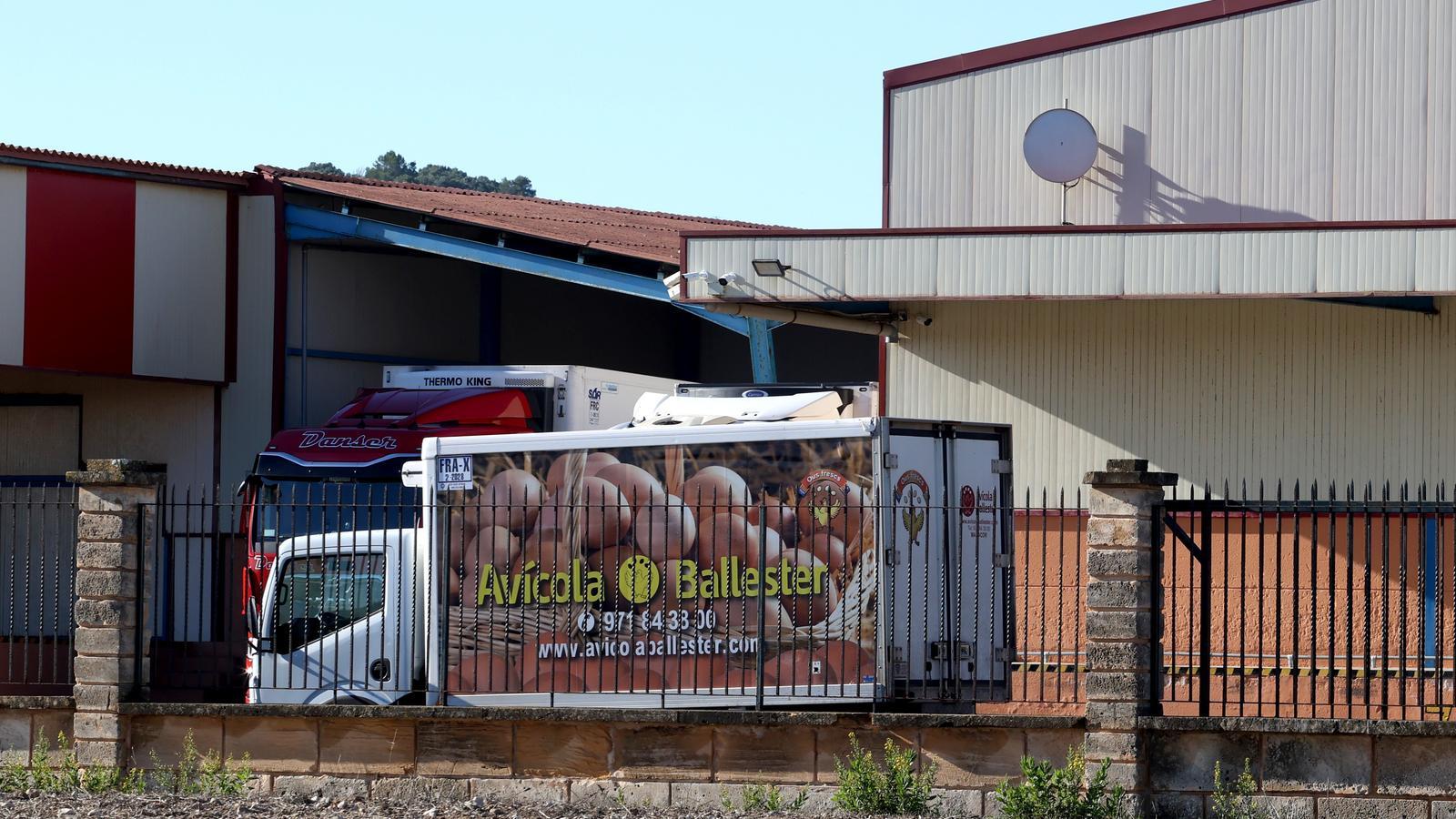
The production of more than half of the chicken eggs in the Balearic Islands is under suspicion. The farms of Avícola Ballester and Avícola Son Perot, linked to the same business group and known among animal rights groups as the “horror farms,” have accumulated complaints due to the conditions in which they keep thousands of chickens. Just one of the farms, Es Caparó, in Manacor, has a production capacity equivalent to nearly 60% of all chicken eggs produced annually in the Islands. A sector that, in a context of growing demand for the product, could be an example of local, zero-kilometer agribusiness and has instead become a recurring focus of conflict over animal welfare, sanitary and hygienic conditions, and the disturbances that these farms generate for the neighbors.
However, and despite this history of controversies, the company now aspires to expand the business with a new farm of 80,000 hens at the Son Brau estate, in Manacor. All this draws a worrying situation for the future of local food production, aggravated by the deficiencies of some public infrastructures. Health problems and the closures of municipal slaughterhouses, especially in Inca and Manacor, have contributed to a situation in which a part of the birds raised in Mallorca have had to be transported to the Peninsula to be slaughtered.
However, while institutions promote local products, part of the food chain remains marked by complaints regarding sanitary shortcomings and structural deficiencies.
Animal rights organizations ARDE and Satya Animal have reported the conditions of the Mirabò farm, also owned by Avícola Ballester, in Manacor to the Public Prosecutor's Office this week.
Llucmajor, also reported to the Public Prosecutor's Office
The complaint has once again put the focus on a company that has another criminal investigation open by the Public Prosecutor's Office regarding the company's farm in Llucmajor. This facility, also belonging to Avícola Son Perot, had been accumulating neighbor complaints for years due to bad odors and the proliferation of insects, in addition to complaints from animal rights activists regarding the poor conditions of the hens.

After inspecting the farm in May 2025, the Department of Agriculture ordered the closure of a shed and in June proposed a fine of 200,000 euros for various infractions. The scandal even led to the withdrawal of Avícola Ballester eggs from various supermarket chains. The case reached the Llucmajor City Council plenary session, which approved a motion demanding the closure of the farm.
Although the criminal case for possible animal abuse was archived, in April the Provincial Court admitted for processing the appeal against the archiving filed by the platform STOP Macrogranja Llucmajor. Sense Olor ni Mosques, together with animal rights organizations such as Satya and CREMA, and the case remains active.
It is for this reason that, despite the 200,000 euro fine proposal by the Department of Agriculture, this procedure is paralyzed until the criminal matter is resolved, indicate sources from the Department.
Manacor does not want any new farms
On May 28, in Manacor, all alarms went off. After the failed project in Sineu, where Avícola Son Perot had planned a mega-farm for 750,000 hens that sparked very strong neighborhood opposition in 2025 and which the City Council rejected, the Government approved a decree-law to limit the size and location of new intensive poultry farms. Parliament passed Law 2/2025, which prohibits new farms with more than 160,000 laying hens and sets minimum distances from residential urban land: two kilometers for farms with more than 20,000 hens; four kilometers for those with more than 40,000; and six kilometers for those with more than 80,000; and maintains the obligation to comply with the rest of the environmental and livestock requirements.
In this context, the poultry company presented the new project for Son Brau, in principle, complying with the precepts of the new regulation: 80,000 hens and far from the urban center of Manacor. However, the residents of the area reacted quickly with informative meetings, a signature collection, and a demonstration in front of the City Council plenary session, with banners and shouts of 'No to the mega-farm'. The plenary session approved a motion against the project in July, with the votes of all groups except Vox. The project includes two sheds of 40,000 hens each, a shed for packing eggs, a covered manure storage area, and other facilities, with an estimated water consumption of 9,600 cubic meters.

This project continues today in environmental processing, however the City Council has already forwarded unfavorable reports from various municipal services to the Government.
The Urban Planning report points out that the warehouses and the manure storage facility exceed the maximum volume per building and warns that there are pre-existing constructions without a license, a fact that does not allow for new authorizations to be granted. Likewise, the municipal Environment report questions the lack of alternative locations, since the project is located only 300 meters from the protected special conservation area of Na Borges and considers the assessment of the effects on the Son Talent aquifer, the management of waste such as poultry manure and leachates, water consumption, odors, and traffic to be insufficient. The City Council also raises objections regarding mobility and warns that the access road is not considered suitable to support heavy-tonnage vehicles. In this sense, the Manacor Local Police describes a rural road about 2.5 meters wide and warns that it is not adequate for a significant increase in freight traffic. In July, the municipal road engineer also reported unfavorably on the use of the road for heavy vehicles associated with the construction and operation of the farm.
The City Council sent the reports to the Government this summer and has also asked the Council of Mallorca to assess the increase in traffic volume on the access road at the intersection with the Ma-3322, also known as the Camí de Conies.
The new complaints from Satya and ARDE against two of Avícola Son Perot's farms in Manacor come at a crucial moment when the Government must issue the final authorization. However, the unfavorable reports from the City Council could hinder the green light. The company views the latest complaints from animal rights activists as “a pressure strategy regarding Son Brau,” and points to “people with purchasing power who fund these groups”.
An authorization in a convulsive context
The official snapshot of poultry farms in Mallorca is that of a registry with thousands of farms, although almost all of them are for self-consumption. Of the 3,847 farms, only 33 are for the production and breeding of hens. Of the 59 official control files regarding livestock that the Department of Agriculture currently has open, 39 are listed as closed, 5 appear as files with sanctions, and another 15 are still being processed.
The organizations ARDE and Satya delivered 50,000 signatures to the Government on Friday against the controversial company's new project. They are asking the Minister of Agriculture to take a stand, but Joan Simonet maintains that the complaints and the Son Brau project are separate procedures and that the authorization must be resolved in accordance with the reports and the processing, because not doing so "would be prevarication." In this turbulent context, Son Brau is awaiting environmental authorization.
