The linguistic history of an ‘i’ in Mallorca
'Andraitx', a sort of orthographic Frankenstein built with pieces of two spellings: the 'i' of the old 'Andraig' and the 'tx' of 'Andratx' is a hybrid creature that was born in the 19th century, when Catalan lived under the institutional pressure of Spanish

-
CAT -
CAST -
DE
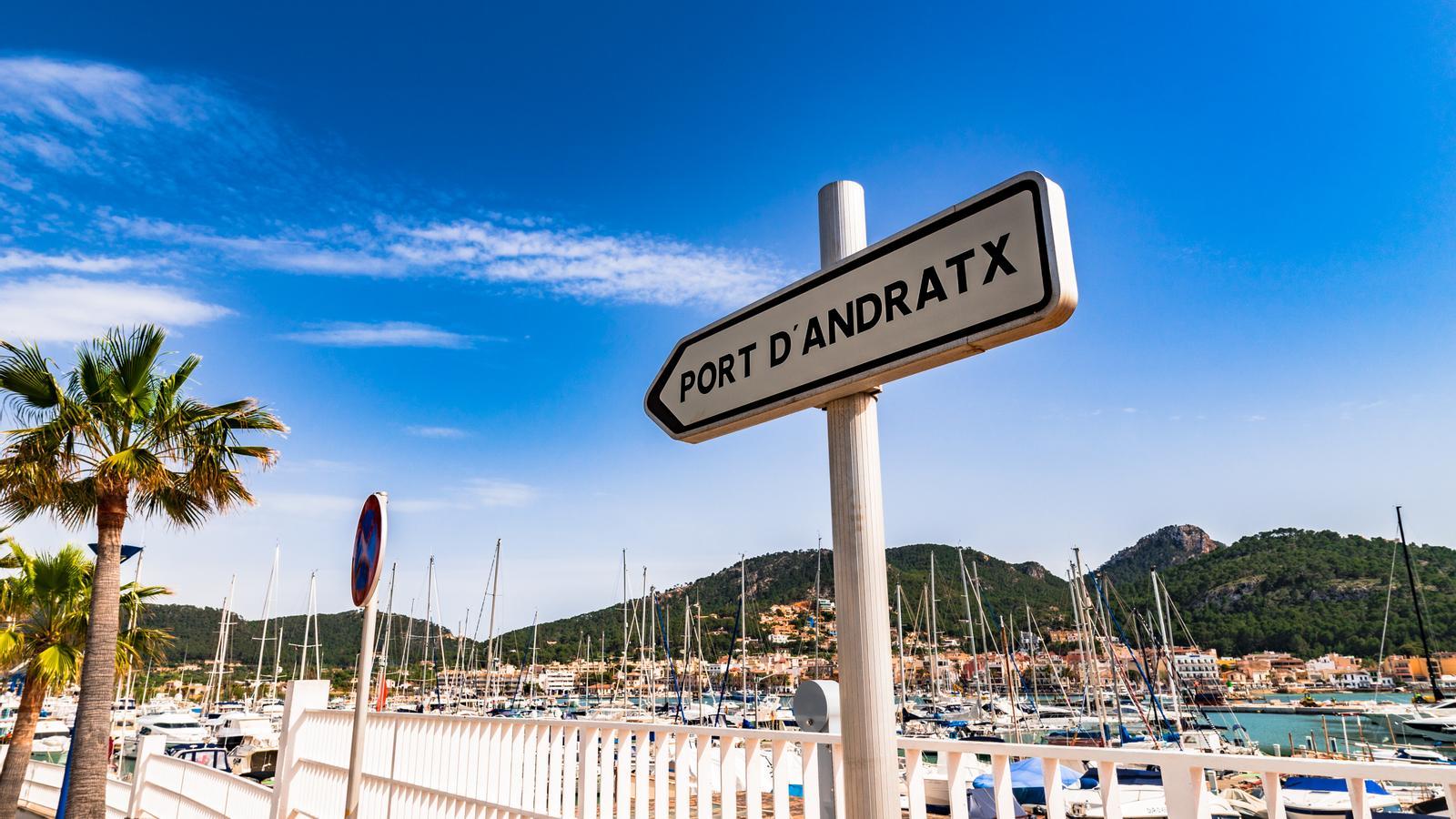
PalmaAndratx, like all our towns, is well loaded with linguistic anecdotes. The one that occupies us today arises from a confusion between spellings that the Catalan-Valencian-Balearic Dictionary (DCVB) unravels with documentary sources and philological criteria. At the entry 'Andratx', the dictionary documents the old spelling Andraig from the 13th century to the 19th and the modern Andratx from the beginning of the 19th century. In between, a parade of incorrect graphic variants, such as 'Andrayig’ and 'Andrag’, documented during the Middle Ages and the modern era. In the 18th and 19th centuries we find 'Andraix’ and 'Andrax’, while 'Andrache’, from the 18th century, and 'Andraxe’, documented in 1812, are identified as Castilian adaptations. But we still have another spelling, which appeared in the 19th century, that will take us to the very core of our history.
And now we have arrived where we wanted: Andraitx, a kind of orthographic Frankenstein built with pieces of two spellings, the 'i' from the ancient 'Andraig’ and the 'txfrom 'Andratx'. A hybrid creature that, like Mary Shelley's, was born in the 19th century, but which, unlike that one, did not need any scientific experiment to come to life. It was enough for it to have the graphic confusion of an era in which Catalan lived under the institutional pressure of Castilian, that language which, in our family vocabulary, we called 'foreigner' and which bequeathed to us expressions like 'parlar es foraster’.
Orthographically, we know that the digraphs '-ig' and '-tx' can represent the same sound, the voiceless palatal affricate that we pronounce at the end of 'passeig' and 'despatx'. The regulations establish that we write '-ig' when words of the same family present 'g', 'j', 'tg' or 'tj', like 'passeig' and 'passejar', and '-tx' when this digraph is preserved in derivatives, like 'despatx' and 'despatxar', 'Andratx' and 'andritxol', 'Felanitx' and 'felanitxer' and 'Costitx' and 'costitxer', among others.
When 'Andraitx' appears
We return to the 19th century, when ‘Andraitx’, with that saffron milk cap in the shape of 'i'and that had been grafted between the old spelling ‘Andraig’ and the modern ‘Andratx’. Curiously, it is in the same century in which it was published Frankenstein, the story of a creature that the cinematic imaginary would end up representing as being built from pieces of corpses. Our orthographic Frankenstein was not made of a single piece either.
However, the history of place names cannot be detached from the processes that condition the life of languages. The Nueva Planta decrees and subsequent provisions progressively imposed Spanish in official spheres, to the detriment of Catalan. Place names are reservoirs of collective memory that preserve the traces of these processes. Philip V knew this well when, on November 27, 1707, after having ordered the burning and destruction of Xàtiva, he imposed a change of its name to New Colony of San Felipe. But names, like languages, have an extraordinary capacity for resistance. Xàtiva recovered the place that belonged to it during the Liberal Triennium, in the 19th century.
No one remembers anymore the restlessness of the New Colony, but the confusion of our orthographic Frankenstein still lingers, now under the label of ‘Mallorcan Catalan’. If we consult the Spanish Wikipedia, we will find that it presents the municipality as 'Andratx’ or ‘Andraitx’ and, in parentheses, clarifies that the official name in Catalan is ‘Andratx’. But a few lines further down it asserts that ‘Andraitx’ is the traditional name in “Mallorcan Catalan”. Here is the subtlety: the hybrid spelling is presented as traditional Mallorcan.
But let's return to that one and nineteenth-century. After forty years of Francoism and the exclusion of Catalan in schools and formal environments, this land was beginning to put order to the names of things. It was about recovering a linguistic landscape written in the native language and fixing the place names in accordance with the regulations. In Andratx, meanwhile, a part of the town did not want to lose that one, and the issue had turned into a battle between supporters and detractors of that letter. And although no one in the town would have ever pronounced 'Andratx’, there were those who defended that spelling as if it were gold.
It was the era when television started to speak in Catalan, with Balearic panorama and, subsequently, theBalearic news. In the early eighties, this last program set out to retrace the battle of the 'i'and through the streets of Andratx. The opinions did not contribute much new to the debate, until the television program came across an Andalusian man. When the interviewer asked him whether the town's name should or should not carry the i, he replied quite cheerfully: “It will goand will go!”. That man must have heard the Andratx inhabitants pronounce the toponym with the final ‘tx’ sound, like that of ‘despatx’, but he reproduced it through the filter of his own phonetic habits, characterized, among other traits, by the weakening or loss of certain final consonants.
Ignorance
The anecdote gave us an involuntary lesson. Linguistic issues, like medical ones, no matter how much they affect us personally, are not resolved by voting, by desire, or by whim. Scientific knowledge does not depend on the number of hands raised. No one would board a plane if the pilot had to be chosen by a vote among the passengers. Why, then, must we accept that linguistic facts be decided by popular vote or political convenience? Linguistic ignorance begins when opinion grants itself the authority of knowledge. It is worth remembering this when we hear speeches that aim to turn Catalan, Valencian, and Majorcan into different languages.
