Menorca's silent growth: recovers more than 800 tourist places
The tourist places bag has put 800 beds back on the market, a brake on the containment measures of these last years that has already motivated the unanimous criticism of hoteliers and ecologists

-
CAT -
CAST -
DE
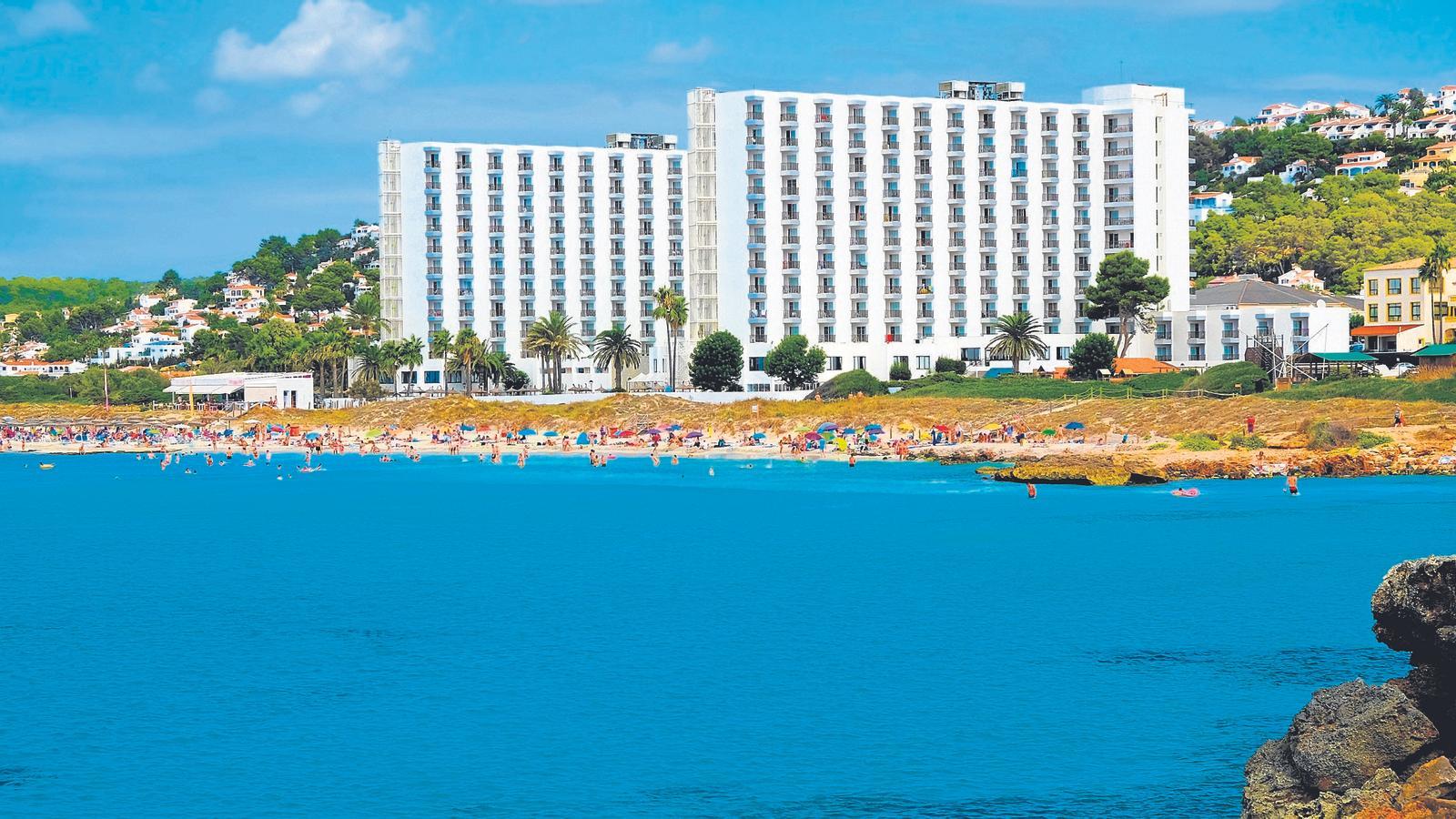
CiutadellaThe moratorium that has been in effect since 2022 has resulted in the loss of over 2,800 tourist places in Menorca in the last four years, which this season offers 81,261 beds to visitors, below the 84,000 mark that had been surpassed just after the pandemic.
The PP government on the Council attributes this in part to "containment in suitable areas and tourist decline within villages," which it claims to have promoted and which has led to the disappearance of 1,500 tourist places from urban centers that can now be recovered for the residential market. Thus, it emphasizes, it has managed to reduce the historic maximum of tourist rentals from 30,328 beds achieved in 2023, before the change of government, to 28,873 places.
However, for the past year, the island Council has offered a shortcut to developers and tourism entrepreneurs who wish to continue opening new establishments. This is the temporary pool, which allows for the reactivation of one tourist place for each one that is deregistered. Through this channel, in fact, more than 800 places that were not operational until now have been returned to the market, equivalent to 160 homes that can accommodate tourists again. And most of them are concentrated in Ciutadella (36%), Sant Lluís, and es Mercadal (20%), the three municipalities most affected by tourist pressure and pressure on aquifers.
This is what emerges from the responses given by the Minister of Territorial Planning, Núria Torrent, to the information request from GOB and to the questions from the coordinator of Més per Menorca, Esteve Barceló, regarding the real impact of the temporary pool on tourist rentals. According to Torrent, this "system for acquiring tourist places within a zero-growth model" has also had a beneficial economic effect, as it has allowed the Council to collect over one and a half million euros.
By the first half of this year, fines against illegal tourist rentals amounting to 4,068,132 euros had also been imposed, the highest figure for the institution. However, the reinforcement of tourist inspection has not been as significant as the Council announced. Torrent admits that there are the same nine tourist inspection positions as at the beginning of the term, although, since last year, four more temporary positions have been created, financed through the Sustainable Tourism Tax (ITS). In fact, there is still only one person to process all the sanctioning proceedings that are opened.
A "serious mistake": there is a lack of water
The GOB has seen the “serious mistake” that the tourist places exchange represents and has asked the island Council to eliminate it and always demand guarantees of water availability for any new tourist concession that is approved. “They are inactive places, which have stopped functioning,” it points out to justify that their withdrawal from the market “should not generate any type of compensation for the former holders.” Environmentalists understand that doing so “is a gift at the moment Menorca is experiencing, with water reserves that are insufficient and with a real estate market inaccessible to the resident population”.
For the GOB, using this “subterfuge” to evade the tourist moratorium in force since 2022 and making the places that were already withdrawn available again to developers only “increases tourist pressure. And it does so at the worst time, when even voices from the tourism sector acknowledge that the island is suffering excessive pressure”.
At this point, the entity recalls that tourist activity already consumes more water than the resident population and that in urbanizations there are consumptions that multiply by four or five the usual ones in traditional areas.
Like the GOB, the political opposition on the Council also accuses the PP government of promoting hidden growth at a particularly delicate moment for the island's sustainability. “It makes no sense that, while containment is being discussed, more than 800 places that were not being used are being put back into circulation,” criticizes the PSOE. For the socialists, the exchange “is a subterfuge to continue issuing licenses despite the moratorium and when a cap on places has not yet been approved”.
“There is neither tourist degrowth nor any plan to deal with overtourism,” denounces the spokesperson for Més per Menorca, Noemí García. “The PP only sells smoke. Menorca needs less propaganda and more decisions,” she adds. The coordinator of Més, Esteve Barceló, highlights that “if tourist places have not increased today, it is thanks to the decisions made in 2022, not because the PP has promoted any containment policy”.
40,000 illegal places
The hotel employers' association has also sided with GOB and has asked the Council not to register any new beds without first de-registering a spot from the 'pirate' offer. Ashome calculates that there are currently more than 40,000 illegal spots in Menorca's tourist rental market and demands action against this unfair competition.
The numbers, in fact, do not add up. The Menorca Socio-Environmental Observatory (Obsam) recorded a maximum influx of 218,946 people on the island last August, when theoretically there are just over 103,000 inhabitants and 82,000 regulated tourist spots. Where do the remaining approximately 35,000 people sleep? Far from reducing, Obsam notes that human pressure continues to grow, between 1% and 5% monthly compared to last year and between 12% and 21% if we compare this year's data with those of 2022, when the tourist moratorium was approved. The resident population, which cannot find affordable housing, and the water reserves, at their lowest point ever, are suffering the consequences.
Even so, not even the tourist rental business owners themselves are satisfied. The Viturme employers' association accuses the Council of having paralyzed the granting of new licenses for four years due to the moratorium and of not having yet set a ceiling for the island's tourist carrying capacity. The calculation made a year ago at the Council's request, 107,917 spots, would mean an increase of 23,859 more beds, but the island government has not politically accepted it because water sufficiency was not taken into account. Real containment is needed, a true zero growth.
