When James I helped the Moroccans to invade Ceuta
The complicated relationships between islanders and Maghrebis throughout centuries, a neighborhood that is back on the table
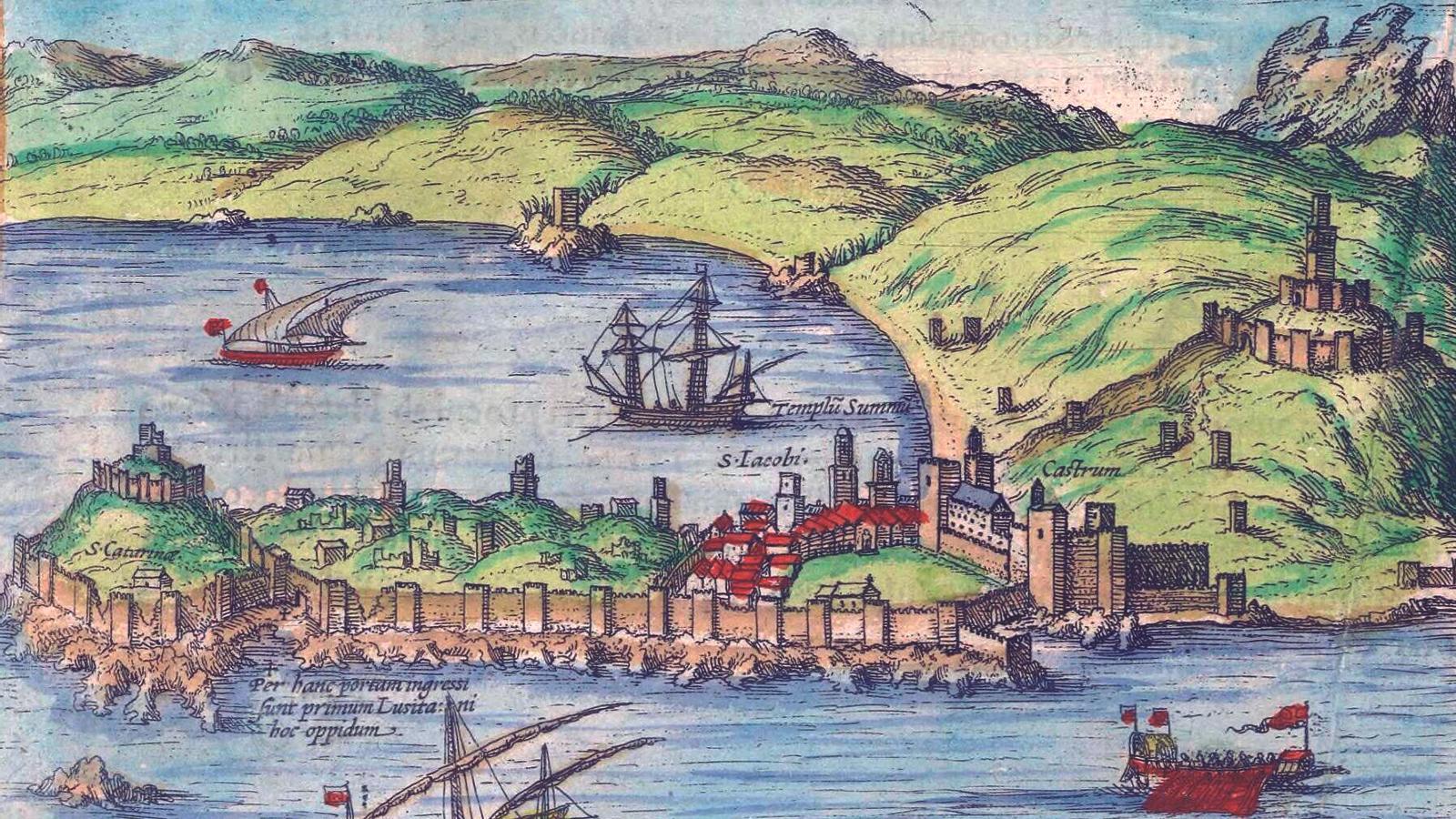

PalmaYes, you read that right: James I, the champion of Christendom, who drove Islam out of Mallorca and the Pityusic Islands, provided valuable aid to the Moroccans when they wanted to invade Ceuta. It is true that, at the time, Ceuta was part of another Islamic domain. This is one of many episodes in a long history of complicated relations between neighbors. So long, in fact, that it has reached the present day.
It is worth clarifying that this ‘Reconquista’ that students across the State had to swallow for centuries, and which some still like so much, is a term that historians no longer use. Christians fought against Christians and Muslims against Muslims there. James I himself, despite the fairytale image we have of him beating up infidels, used Islamic allies in the conquest of Mallorca in 1229, such as Ben Abbed, who provided supplies to the invaders, even though it was supposed to be a kind of crusade.
There was a good reason to associate with the infidels: necessity. In the Middle Ages, and practically until the 19th century, North Africa, and more specifically the Maghreb (the western strip), was the scene of an essential commercial exchange: Mallorca, David Abulafia stresses, “could not survive without trade.” We have never been self-sufficient. Trade was so essential that special licenses were granted that allowed trading with Muslims, even in times of war.
Of course, this economic flow already existed when the Islands were still under Islamic rule: the Genoese, skilled merchants, used Mallorca as a stopover on the route to Ceuta in 1182. For the Menorcans, then still with Muslim rulers, Ceuta was also one of their destinations around 1240, with the shipment of butter – the fame of Menorca’s dairy products goes back a long way.

The transition to Christian hands did not stop the exchange. Barely a few years after the conquest of Mallorca by James I, records exist of journeys to Ceuta. Popes Gregory IX and Innocent IV had to grant the corresponding licenses, which allowed the islanders to trade with the enemies of the faith: do not let religion spoil a good deal.
The route with the Maghreb was the most important of those used by the islanders. Above all, they traded in food products. The salt from Ibiza was one of the goods most well-received in North Africa. Later on, towards the 18th century, brandy and textiles were exported from the Islands. And livestock, wheat, barley, beans, wax, and leather were imported.
Mallorcan emigrants in Ceuta
Of the Maghreb territories, the Marinid kingdom was the one corresponding to present-day Morocco, with which the Mallorcans established “a lucrative business,” in the words of Abulafia. It was an often conflictive relationship: the exchange of goods was a necessity, but piracy, privateering – piracy legal and blessed by the power of the day – and military confrontations often interfered with trade.
James I established treaties with the rulers of North Africa, which allowed for the continuity of trade flow. Thus, it is not strange that the Conqueror and the Marinid sultan signed an agreement in 1274, according to which the Christian monarch would provide him with a fleet of 50 ships and 500 knights, in exchange for 200,000 bezants, which must have been a fortune at the time, for the conquest of Ceuta, which was in the hands of a rival Islamic domain.
Fighting for Christendom did not pay as well if the infidels paid you well. It was not until 1415 that the Portuguese conquered Ceuta. And it was in 1640 when the current autonomous city remained in Spanish hands. Contrary to the cliché of the Reconquista, political conveniences did not understand religious colors, just as they do not now. Morocco, Christian Castile, and Islamic Granada formed an alliance in 1285 against the Crown of Aragon, which at that time included the Balearic Islands. The King of Aragon, Alfonso the Frank –grandson of James I– desperately tried to make the Moroccan sovereign change his position and gain his support against the Castilians. Without success.
James II of Mallorca also took particular care to maintain a good understanding with the North African territories. In large part, because that also meant a good source of income for him. So he established consulates there, that is, his own commercial representations. The problem was that the Catalans had interests in the same area, and this meant that islanders and mainlanders did not always behave like good brothers. Nor was the relationship with the Maghrebis always harmonious. For example, Guillem Morro records how, shortly before the death of James II, “a fleet of galleys from Ceuta attacked Majorcan ships” on the North African coast.
Between 1308 and 1331, island merchants represented more than half of all trade with North Africa, adds Morro. James III signed a peace agreement with the Moroccan sovereign in 1339. In case there was war, it would not affect business either: in 1344, the islanders were authorized to continue trading with the Muslims, even if their armies were killing each other.
Trade did not understand beliefs: Christians and Muslims associated, without apparent difficulty, for mercantile enterprises. The Jews played a key role thanks to their contacts with the North African communities. This was suspicious to the Pope's corsair fleet –the Pope also played a part in it–, which captured a ship in Mahón with the excuse that it carried “Jewish and Moorish letters”, says Morro.
In addition to being a commercial enclave, the Maghreb was used as a final destination land for some of the last free Mallorcan Muslims, who did not feel very comfortable under Christian rule. Ceuta was also one of their destination sites. In the 15th century, from Mallorca, trade was conducted with Alcúdia: not the Mallorcan Alcúdia, but another one near Melilla.
Orders that were not obeyed
With the Hispanic empire –from the 16th century onwards– things did not change much. In theory, the North African monarchies were enemies. But the successive prohibitions on trading with them –Eloy Martín counts at least a dozen between 1494 and 1703– were not obeyed, not even by those who were supposed to enforce them: the captains general. On the ground, they were well aware of the dire need for cereal, of which the Balearic Islands were deficient.

Faced with the inevitable, the Spanish monarchy opted for a surreal solution: applying a 10% tax on smuggling, a manifestly illegal activity. Since they could not stop it, at least they could take a cut. What did a good portion of the merchants do? Hide the place of origin of the products if they were North African, so as not to have to pay the corresponding fee.
Much more than half of Majorcan trade with North Africa was with enemy territory, while it did not even reach a quarter with the places of Spanish sovereignty, such as Ceuta – it already was one. On the other hand, privateering continued to be a good business: the North Africans captured ships and crews from the Islands, and the islanders did the same with theirs.
In the 18th century, the Menorcans were able to take advantage of a favorable circumstance: they were no longer Spanish, but British. So the limitations of Madrid did not apply to them. Thanks to Menorcan neutrality, the rest of the Balearic Islands were able to be supplied with North African wheat.
The Spanish crown signed a treaty of peace, friendship, and trade with the Sultan of Morocco in 1767. Without obstacles, that trade grew spectacularly. North African products, Martín points out, “got the Islands out of more than one difficulty” when they saw their economy strangled, first by Spain's conflicts with Great Britain and then by the Peninsular War.
Times changed and Morocco would eventually even become a Spanish colony, with an endless war in which a lot of islanders met their death; just of Menorcans, 57. Currently, nearly 30,000 people with Moroccan nationality live on the Islands.
The tug-of-war that was common between islanders and Moroccans – suppliers and clients, corsairs and pirates and victims – reached one of its peak points of tension in 1338, during the reign of James III, when the Sultan of Morocco finished an armada of twenty-three ships to invade the Islands, explains Guillem Morro. The alarm was sounded and the islanders prepared a larger squadron for defense, requesting Valencian help.
The Moroccan expedition entered the bay of Palma, saw the deployment of the Majorcans, and turned back. But that threat had to be taken into account, so the islanders decided to “build a permanent armada of six galleys”, says Morro.
Arming a defense fleet costs a fortune, and in 1341 the jurors of Majorca – equivalent to current councilors – sent an embassy to James III – he was practically never on the island – where they asked not to have to pay that expense.
However, the threats were mutual. According to David Abulafia, James III also intended to invade Islamic Africa.
The Moroccan danger remained between 1345 and 1348, when Peter the Ceremonious had reincorporated the Islands into the Crown of Aragon. That a Majorcan corsair captured seven subjects of the King of Morocco became a casus belli: the North African monarch ordered the capture of all Majorcan ships that appeared in his waters.
Information prepared based on texts by Guillem Morro, Onofre Vaquer Bennasar, David Abulafia, Maria Barceló Crespí, Miquel Àngel Capellà Galmés, and Eloy Martín Corrales.
