Easy and traditional recipe: Chicken stew with chickpea (or bean) sauce
We explain to you how to prepare chicken stew with chickpea (or bean) sauce at home

-
CAT -
CAST -
DE
PalmaThe mulberry tree presided over the yard. The gigantic tree extended its branches and sheltered the hens that pecked at blades of grass and the unfortunate insects that had the bad idea of entering the enclosure. For years no pig had lived in the pens and, instead, the birds laid their eggs there, coming and going as they pleased, since the door, an old bed frame, remained always open. For a time, bantam chickens, roosters, and hens lived there together and hybridized into deformed animals, as if in a bad puzzle they had been assembled with the pieces that did not belong to them. The powerful roosters have not sung there for a long time and only a handful of old hens, good layers, roam there.
Raising chickens has been a common practice, especially in the countryside and villages. With relatively modest needs, these animals fed on grain, food scraps, and whatever they found in the yard. Hens ensured a fairly regular supply of eggs, while the males and the specimens that were no longer productive ended up in the pot. Bantam hens, of small dimensions, were especially appreciated for their ability to brood and raise chicks, a quality that made them good allies for the natural reproduction of poultry.
Gastronomic value
However, not all birds were held in the same regard nor were they destined for the same preparations. Age, sex, and the characteristics of the meat conditioned its gastronomic value. Chicken, today one of the most consumed meats, has not always been a daily food. Before the generalization of intensive production, chicken meat was highly appreciated and was often reserved for Sundays, for the sick, and for family celebrations. The adult rooster, with firmer and tastier meat, required long and slow cooking. Stews and 'escaldums' allowed its fibers to soften and all its flavor to be extracted. The hen, on the other hand, had a double culinary life. First, it had been a layer and had contributed to the household's diet with its eggs; when it stopped laying, it still retained considerable value. The meat, tougher than that of a young chicken, was especially suitable for broths, soups, and long-cooking preparations. The recipe book Caules. Cuina menorquina del segle XVIII shows us a wide range of formulas to cook the hen in multiple ways, often in stews enriched with aromatic herbs and spices. One of the recipes, titled 'To stew an old hen', recommends making it drink half a glass of vinegar half an hour before killing it and, afterwards, rubbing it with lemon and hanging it so it would soften.
At another level was the capon, a male castrated before reaching sexual maturity and fattened to obtain meat that is more tender, juicy, and marbled with fat. Breeding it required special dedication and the result was a bird of great gastronomic quality, traditionally associated with festive days and, above all, Christmas celebrations. In Mallorca, the capó a l'ob rei en Jaume constitutes a good example of these festive preparations, in which poultry becomes the great protagonist of the table.
Each animal had its moment and its destiny: eggs for daily consumption, the hen for broth, the rooster for the casserole, and the capon for great feasts. With the industrialization of poultry production, that domestic model has been transforming and chicken has become an affordable and common meat, while it is more difficult to find specimens of hen or capon in the market. Nevertheless, behind these birds still lives the memory of a gastronomy that knew how to distinguish their qualities and take advantage of every possibility.
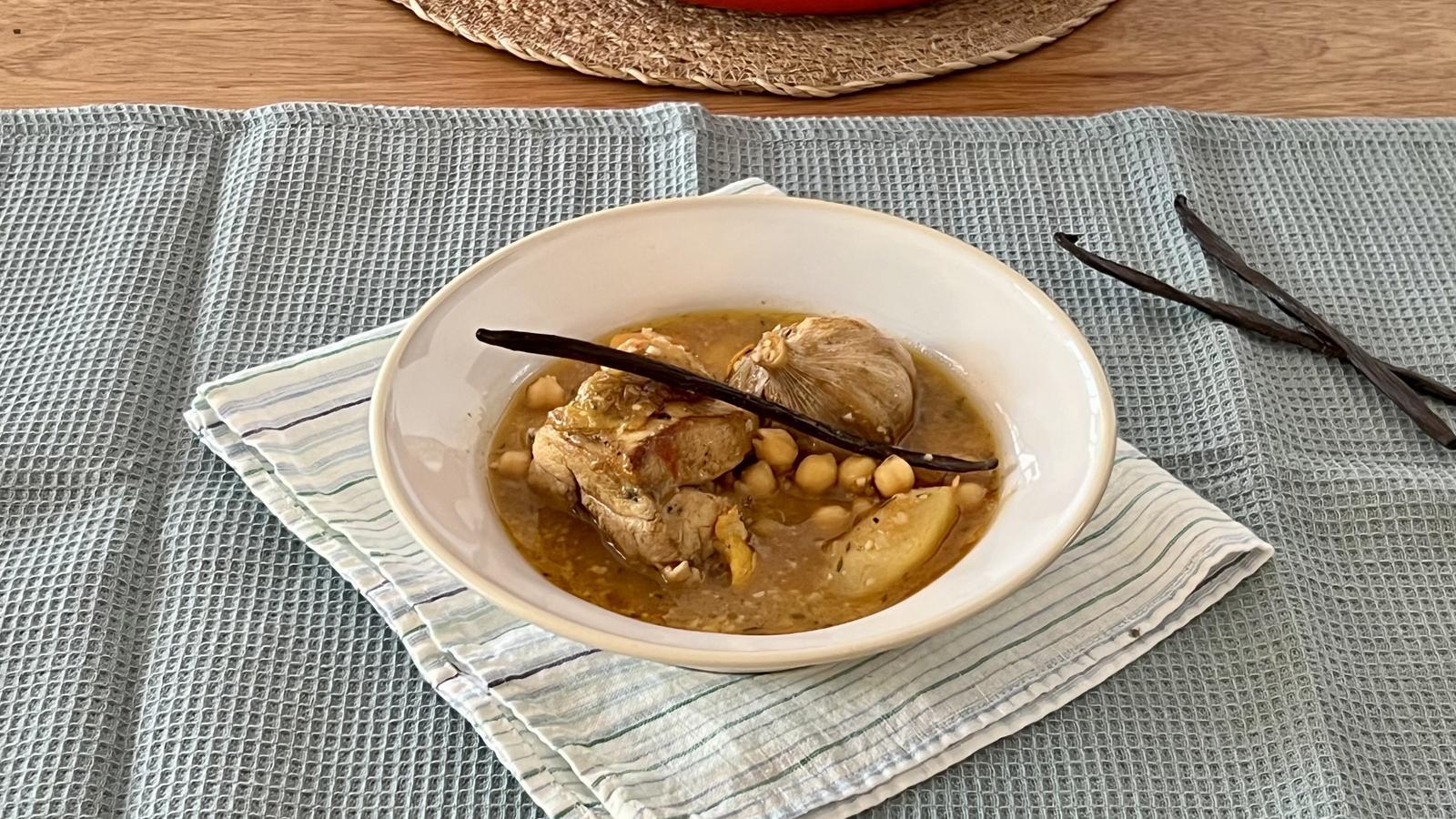
For today's recipe, I have interpreted the hen with bean sauce from the Caules cookbook. A very interesting dish due to the mix of aromatic herbs and spices such as vanilla. In my case, I have swapped the beans for chickpeas out of pure personal preference.
We will sauté the chicken. When it is well browned, we will add the diced onion. Shortly after, we will add the tomato, the head of garlic, the bay leaf, and the thyme. When the tomato is cooked, we will add the vanilla, the orange peel, the rancid wine, and the broth. We will season with salt and pepper. After about three quarters of an hour, or when the meat is cooked, we will add the chickpeas and the minced mixture. We will keep it on the heat for another five minutes and serve it very hot.
l 1 chopped hen
l 1 large onion
l 2 tomatoes
l 1 head of garlic
l 1 orange peel
l 1 vanilla bean
l 2 bay leaves
l 1 sprig of thyme
l boiled chickpeas or beans
l 1 glass of rancio wine
l 1 l of broth
For the picada
l 1 handful of almonds
l 1 biscuit
l parsley
l 1 garlic clove
