Summer cod
We explain how to prepare Cod a la mongil style at home
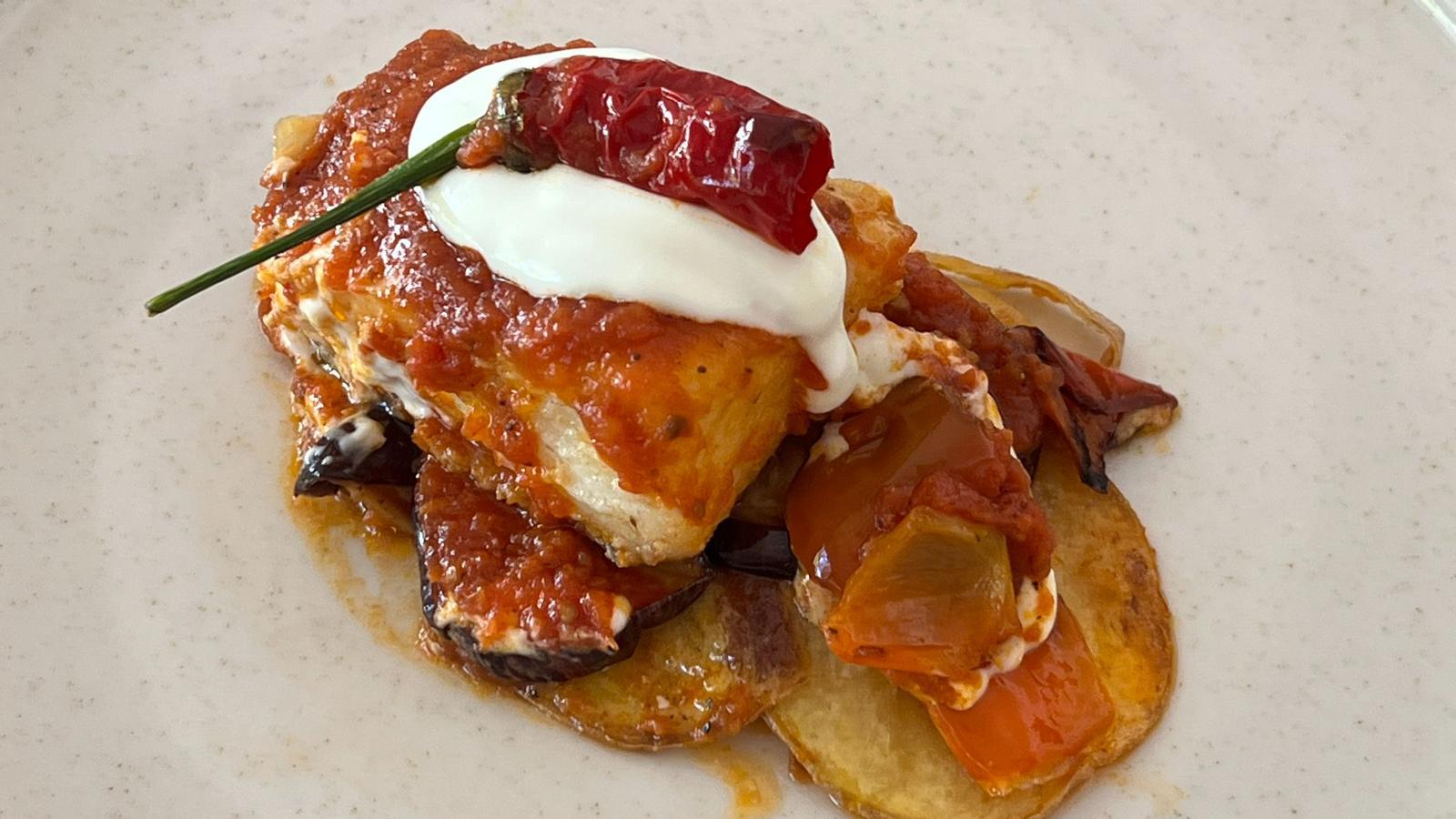

PalmaCod has been for centuries one of the great protagonists of our cuisine. Its long preservation made it an essential food when fresh fish was scarce or inaccessible, but also an ingredient capable of adapting to the rhythm of the seasons. While in winter it was accompanied by seasonal vegetables such as green leaves, with the arrival of summer it found its best allies in garden fruits: tomatoes, peppers, and in some cases, eggplants.
It is precisely the tomato that gives personality to one of the most present families of recipes in 19th-century Mallorcan recipe books. Under the name 'bacallà a la biscaïna' appear numerous formulas that share an essential characteristic: a sauce made with tomato, often enriched with well-sautéed onion, garlic, and, depending on the case, roasted peppers or red peppers and spices and condiments such as cinnamon and sugar. In other cases, however, cod is not even cooked with these ingredients, as is the case with 'bacallà a la biscaïna en cassoleta' from the manuscripts of the Llabrés Archive. In this case, the fried fish is accompanied by a sauce made with the water in which it has been previously boiled, raw oil, and lemon. A recipe so far from the original that it resembles nothing more than its name. The interpretation of the traditional Biscayan sauce from the Basque Country, cooked mainly with the pulp of romesco peppers, onion, and tomato, in smaller quantities, reflects the culinary prestige acquired by certain Peninsular preparations by adapting it to local produce. Likewise, this type of recipe coexists over time with others of a similar nature that use tomato and are written as 'bacallà amb salsa' or 'amb salseta' and that usually omit the pepper.
Essence intact
With the turn of the century, the designation ‘a la biscaïna’ is only preserved in recipe books from the early 20th century. On some occasions, the name acquires conventual connotations, such as cod à la mongil style, from the recipe book Cuina mallorquina de casa de senyor (Palma, 1927). The change of name does not imply a profound transformation of the recipe. The base continues to be a well-confited tomato sofrito, to which peppers, fried potatoes, and dollops of alioli are added. It is a good example of how many preparations evolve in the way they are named while keeping their essence almost intact. Convents, great repositories of culinary knowledge, took advantage of an affordable and long-lasting product to prepare tasty dishes, which were suitable for both abstinence days and the daily cuisine of religious communities. The tomato sauce acquired special importance, as it provided succulence and balance to a fish with an intense flavor, while the peppers added sweetness and color. Other examples of cod with tomato that were part of the convents' menu include baked cod of the Augustinian nuns (La cuina conventual a Mallorca, by Aina Pascual and Jaume Llabrés, 2005), which was covered with the sauce and onion, or the roasted tomato cod of the nuns of Santa Clara (Memòria de la cuina mallorquina, by Antoni Tuogores, 2004), which was cooked with a sauce of roasted ramellet tomatoes, as the name indicates, and which was also finished in the oven.
Over time, denominations such as ‘cod Biscay style’ or ‘cod with sauce’ eventually merged under a more generic name: ‘cod with sauce’. Despite the changes in nomenclature, all these recipes share the same essence, based on cod cooked with summer vegetables, a combination that has endured to this day and continues to hold a prominent place in both home cooking and the menus of many Mallorcan restaurants.
If we buy salted cod, we will desalt it for two or three days, changing the water from time to time. The last time we will change the water for milk.We will dry the cod and set it aside.We will cut the potatoes into slices and the pepper into rectangular pieces, by hand. We will grate the tomatoes and sauté them with a bay leaf, wine or liquor, and 2 or 3 crushed garlic cloves. When the sauce is well cooked, we will set it aside.We will fry the potatoes in batches. In the same oil, we will sauté the floured cod and then the pepper with the hot pepper. We will arrange everything in layers, as if we were making a tumbet. We will pour the tomato sauce over it.With the milk, oil, and a garlic clove, we will make an aioli with the help of a hand blender. When we have this aioli ready, we will put it between the slices and serve. If you want to make a traditional aioli, just replace the milk with an egg and pour in the oil in a thin stream.
l 4 pieces of desalted cod l 2-3 potatoes l 5-6 tomatoes l 2 red peppers l 3 measures of oil l 1 measure of milk l 1 head of garlic l 1 hot pepper l A dash of brandy or red wine l Flour
