The Moncloa vetoes the co-management of airports because it would reduce “Aena's income”
MÉS per Mallorca demands that Francina Armengol processes the initiative in the Congress of Deputies equally

-
CAT -
CAST -
DE
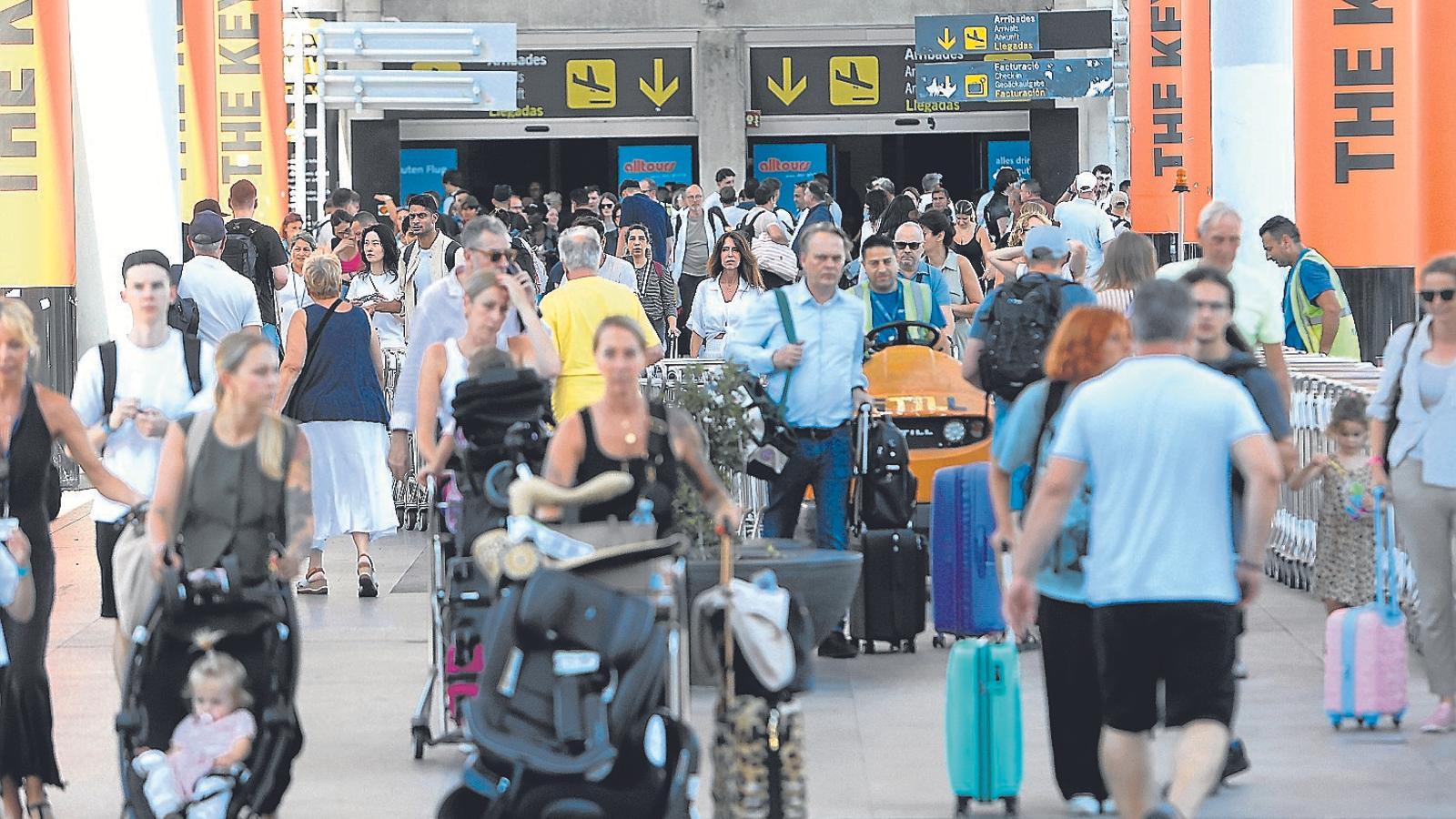
PalmaThe Spanish government vetoes airport co-management, alleging that it could economically harm Aena. The Ministry of the Presidency, Justice and Relations with the Cortes sent a text this Friday to the Congressional Bureau in which it refuses to allow the bill for the Islands to be able to decide on their airports to be processed. It argues that this would cause a drop in “Aena’s aeronautical revenues”. With the document, Pedro Sánchez’s executive says ‘no’ to the initiative that would allow the Islands to intervene in the management of arrivals in a context of mass tourism.

In the document, the Ministry sets out, based on 2026 data, estimates of the magnitude of the economic losses if the Islands were given the option to be part of the management of their airports, which, according to the Presidency, would allow them to decide on ticket prices and the number of passengers. In a first scenario, it is based on airport tariffs and states that Aena, the network manager, could stop earning 32.9 million euros, a fact that would cause the dividends received by the State (owner of 51% of the shares) to decrease by more than 8.3 million euros. In a second scenario, which it calculates based on passenger traffic, it considers that the company would stop earning 32.5 million euros. This figure is the sum of a “decrease in aeronautical revenue” of 20.5 million and 11.9 million from commercial revenue. In this case, the cut in State dividends would be 5.1 million euros. In both scenarios, the Ministry considers that the changes in the management of the infrastructure would negatively affect Aena's assets and its stock market value.

In parallel, the Ministry points out that the bill promoted by MÉS per Mallorca could infringe upon the State's exclusive powers and jeopardize the financial and operational stability of the airport network. "Separating from the criteria that must govern investment planning for the optimization of the airport system as a whole would generate inefficiencies, duplications, and additional expenses," it states in the text. Furthermore, it defends that the centralized model guarantees "solidarity" between territories and connectivity.
For all these reasons, it exercises a "governmental veto" over the bill. Given that it affects state powers, the initiative must be processed in Congress. But since it does not have governmental conformity, it cannot continue its parliamentary process. Thus, any possibility of debate or voting in Congress is suspended de facto, unless the Bureau of the Chamber, based on technical and legal criteria, decides to lift this veto.
MÉS demands that Armengol take action
That is why MÉS per Mallorca has demanded that the President of the Congress, Francina Armengol, make a move. According to Article 134.6 of the Constitution, any proposition or amendment that implies an increase in credits or a decrease in budgetary revenue requires the conformity of the Spanish government to be processed. However, the eco-sovereigntists believe that the Spanish government is using this power to block the initiative in an untimely manner. “They are inventing an economic detriment to justify a political decision,” criticized the MÉS per Mallorca deputy in Congress, Vicenç Vidal. In the same vein, the party's regional deputy, Ferran Rosa, considers that the State cannot veto bills that have an impact on “future or intangible” budgets. The fact that it prevents the processing of the initiative based on an estimate of its economic impact in 2026, when it would likely be approved later, “is already overstepping and violating political rights,” he considers. In the same vein, he criticizes the Spanish government for attributing possible revenue reductions “to the fact that the Government, island councils, and town halls can provide their opinion on the flight cap”.
During the processing of the regulation in Parliament, the PP voted in favor, as did Més per Menorca, while the PSIB and Unides Podem abstained, alleging that it could collide with State powers, and only Vox voted against it. The proposal is framed within the debate on tourist overcrowding: the eco-sovereigntists argued that, if the number of arrivals is to be limited, the Community must be able to decide on the flights that arrive in the Islands. Between January and July 2026, Palma airport received 19.6 million passengers, according to Aena data. After the veto from Moncloa, the decision remains in the hands of the Congress Bureau. “Armengol will have to decide whether she defends the right of the Islands to debate about their airports,” said the general coordinator of MÉS, Lluís Apesteguia.
The Government avoided assessing the Ministry's text. In a press conference, the second vice-president, Antònia Estarellas, said she was unaware of “the details”. However, she defended co-management. “We are committed to this law and we hope it goes ahead,” she said.
