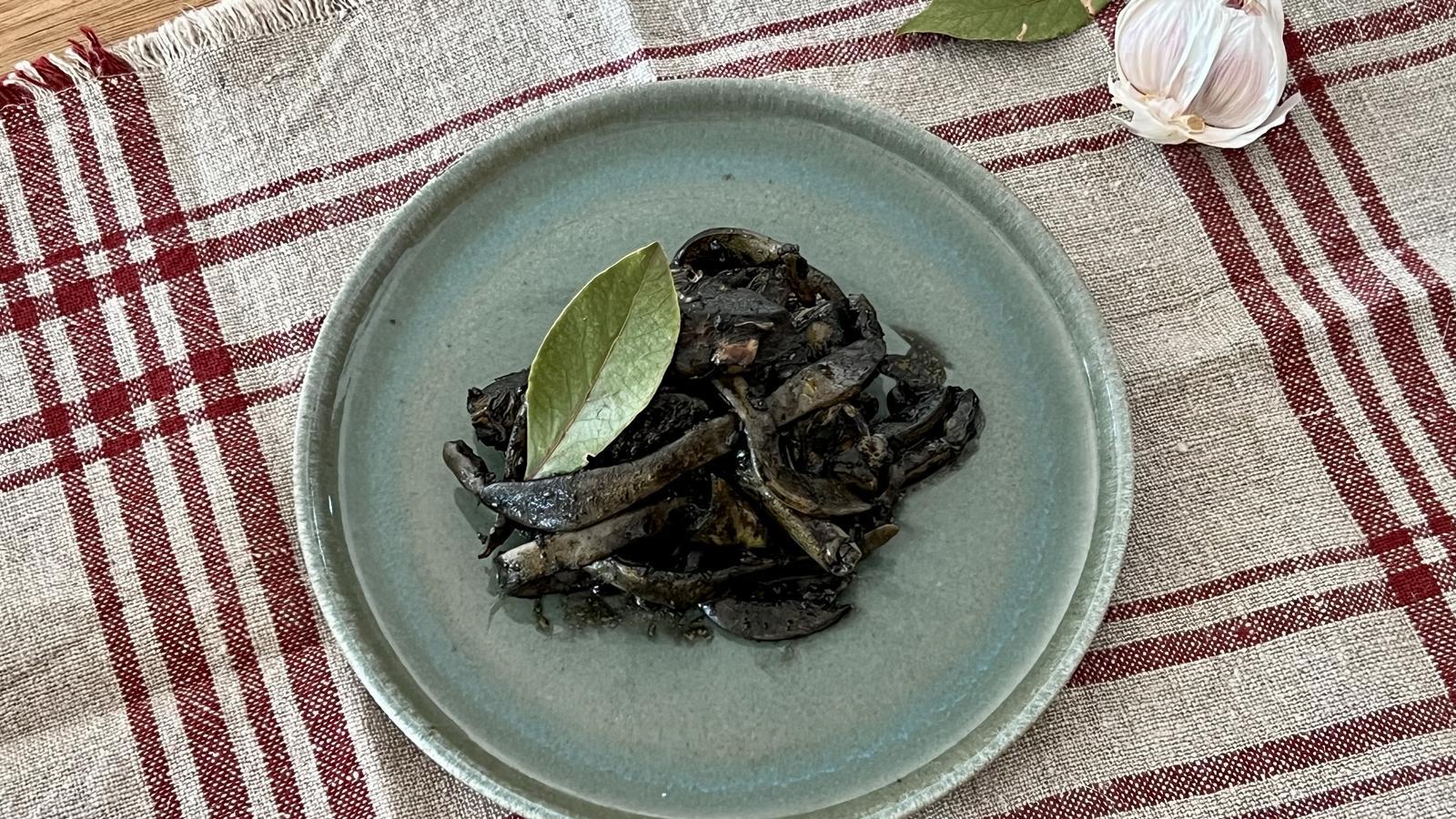
Cuttlefish with its ink, sobrassada and botifarró
We explain to you how to prepare this traditional recipe from the Balearic Islands at home

-
CAT -
CAST -
GER
PalmaInk was a decisive invention in human history because it allowed us to fix and transmit knowledge with ease, permanently and simply. The word 'ink' is a very broad term that includes any pigmented liquid or paste used for writing, drawing, or printing and comes from the Latin tincta, meaning 'dyed'.
The first known inks date back to ancient Egypt and China. In Egypt, a mixture of soot and gum was used to write on papyrus, while in China, solid ink in sticks was perfected, which was dissolved with water and used especially in traditional calligraphy. For centuries, iron gall ink was of great importance in Europe, widely used in medieval manuscripts. Despite the wide variety of inks known, the one that interests us here is that which comes from cephalopods, especially cuttlefish and squid. This substance, made of melanin and mucus, is generated inside an internal sac and is released when the animal feels threatened. In contact with water, it forms a dense and opaque cloud that allows it to confuse predators, hide its position, and gain precious moments to escape.
Gastronomic use
Despite this defensive origin, ink has found another use in gastronomy where it has become a prized ingredient for its color intensity, density, and marine flavor. It is not easy to pinpoint the exact moment when ink began to form part of dishes. Cephalopods have been appreciated since antiquity. Apicius describes how to cook squid, cuttlefish, and octopus in the ninth book of his Art of Cooking, dedicated to the sea, but he makes no reference to this substance at any time. The same applies to medieval cuisine. Logic leads us to believe that both fishermen and cooks discarded nothing and made use of whatever was at hand. The first of our recipe books to mention ink is the Llabrés manuscript, in the 19th century. In the booklet F, one can read a recipe written in Spanish called 'Calamarins amb salsa negra'. To prepare it, a sofrito of onion and tomato is made, chopped squid is added, a little flour, and the ink previously dissolved in water. A similar recipe appears in Cuina popular de Mallorca (Sóller, 1931), where the sofrito is made with onion, garlic, and parsley, and fish broth is added to the ink. In La Cuinera pràctica (Felanitx, 1935), on the other hand, the seafood is marinated a few hours beforehand with salt and lemon, then sautéed, and a picada is poured over it, made with fried bread, white wine, and squid ink. Another way to prepare it is the one collected by Antoni Tugores in Portopetro and published in Memòria de la cuina Mallorquina (2004). In this case, the squid is sautéed whole if it is small, its bone is removed, and it is allowed to soften the ink. Separately, a sofrito of onion and tomato is made, which is then mixed with the squid. The appreciation for this seafood is reflected in recipes where it is prepared with long cooking times or stuffed, so that those that use ink are anecdotal, like a small smudge in a notebook.
The use of ink is more present in the gastronomy of the Pitiüses. One of the most representative recipes is squid with soot. Joan Castelló includes it in the book Bon profit! (1967), in a formula very similar to the Felanitx recipe, only that the squid is cut into slices, floured and fried accompanied by onion. Jaume Fàbrega will collect another version of this dish in La cuina d’Eivissa i Formentera (El Gall Editor, 2021), squid with bacon, black pudding and sobrassada that we will version today, replacing the squid with cuttlefish.
Clean the cuttlefish and remove the skin and shell. Reserve the head and dissolve the ink in white wine. Set aside. Roll up the body of the cuttlefish and cut it into strips. Set aside.Dice the onion. In a pan, sauté the crushed garlic, bay leaf, and peppercorns. Add the onion and, when golden brown, add the cuttlefish ink. Season with salt and pepper.Slice the sobrassada and botifarró. Add them to the onion, stir, and add the cuttlefish. Mix well and pour in the wine with the ink. Let it reduce slightly and serve.If you cut the cuttlefish into strips, you will prevent it from hardening. If you cut it into pieces, just remember to cook it for a very short time or cook it for a long time. Half-measures, never so well said, do not work if you want it to be tender.
1 cuttlefish1 onion2 garlic clovesbay leafchili pepper1 black pudding1 piece of sausage or sobrassada1/2 cup white wine
