Containment and ballast
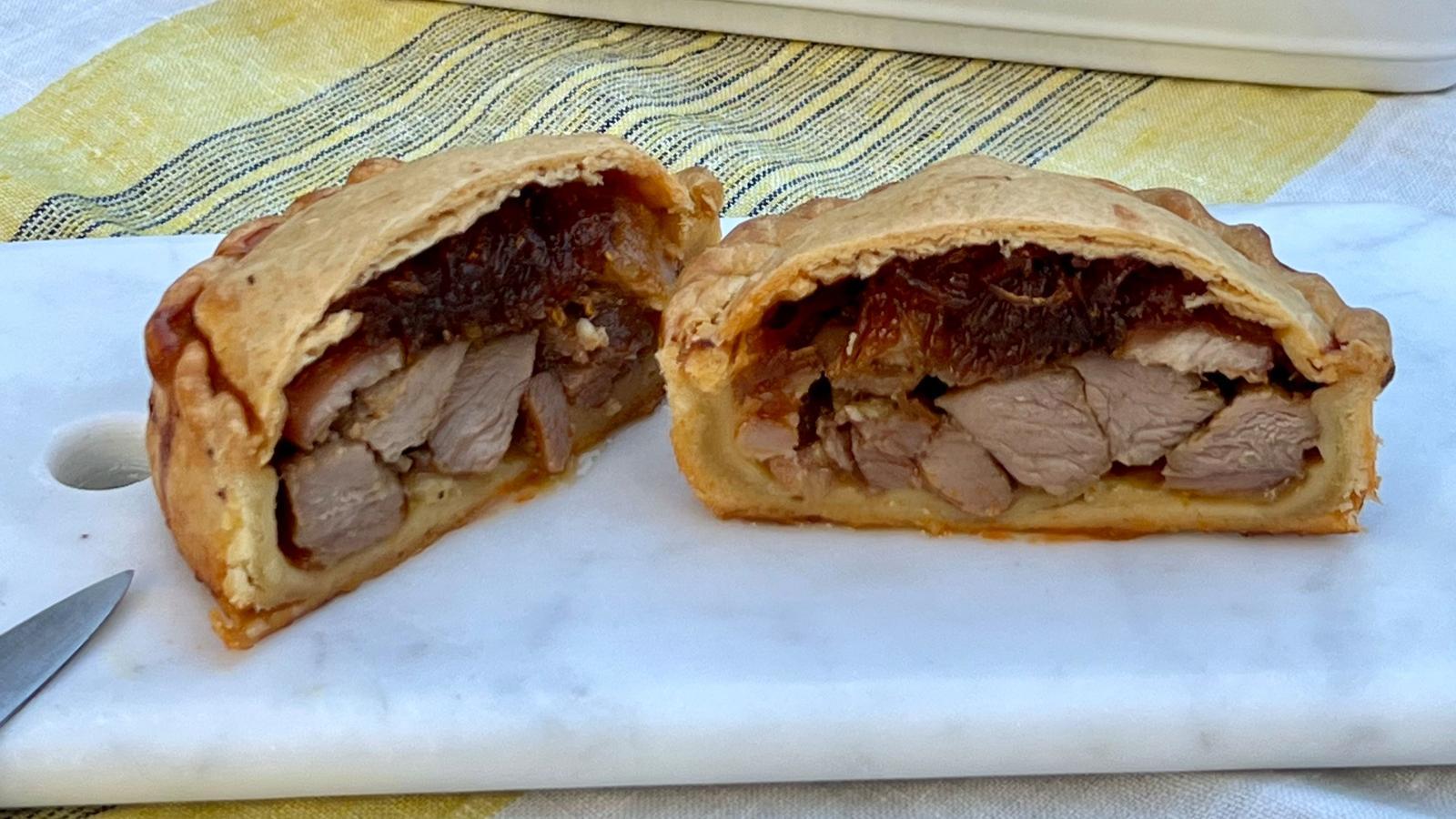
We explain how to prepare meat and angel hair panades at home

-
CAT -
CAST -
DE
PalmaThe streets awaited the passage in silence while the songs were still heard in the distance in a dull murmur. The procession passed, the mournful songs of the mourners chilled our blood with their sadness. They spoke of death and forgiveness, of promised paradises that fled, winding with the jingle of the chain of a penitent and anonymous Christ. We knew nothing of all that, of the grief, we were children and our paradise was a pocket full of sweets.
The first days of Holy Week are characterized by a tone of solemnity. Religious celebrations and processions impose an atmosphere of respect and restraint. As Easter Sunday approaches, this climate begins to transform and solemnity gives way to outdoor gatherings. A playful manifestation typical of these days is the custom of singing 'panades', one of the most vibrant and unique expressions of the festivals and which is twinned with the singing of 'salers' or the 'sales' of the towns of Llevant, the Deixem lo dol from Menorca, and the 'Caramelles' from Eivissa and Catalonia. Gastronomy plays a central role in these practices because it acts as a bridge and gives meaning to the ritual. In towns like Vilafranca, Santa Eugènia, Lloret, and Sant Joan, the 'quintos' (young men reaching military age) tour the streets, going from house to house singing songs and 'gloses' (improvised verses) in the hope of receiving 'panades', 'rubiols' (a type of pastry), or some drink. Bàrbara Duran, in her book Voleu sales? Pervivència i recuperació del cant de salers i quintos al Llevant, Migjorn i Pla de Mallorca ('Do you want sales? Survival and recovery of the singing of salers and quintos in Llevant, Migjorn, and Pla de Mallorca') explains that the 'cants de salers' are traditional songs originating from the 'Goigs a la Mare de Déu' (Songs to the Virgin Mary) that groups of young people performed during the morning or Monday of Easter. Accompanied by various musical instruments, they made their way through the houses in the countryside to collect 'panades', eggs, and money. On the other side of the sea, we find the 'Caramelles', where groups of adults and children, accompanied by instruments, gathered to go to the farmhouses and through the streets of the town to collect eggs, cured meats, and money. All these customs, related to the practices of collecting food and stripped of their religious origin, are maintained above all as a form of collective festival, updated and adapted, which precisely allows for their survival.
Charity Day
Another collective festival typical of Holy Week is the pancaritats, which are usually celebrated on Easter Monday or Tuesday. The pancaritats owe their origin to the feast of Charity, held on Pentecost or Whitsun. In the Middle Ages, the Jurats of the City processed from the church of the Temple and headed to the Riera stream where they blessed bread and distributed it among the poorest families gathered there. The celebration began to overlap from the beginning of the 15th century with the feast of the Guardian Angel of the City and the Kingdom of Mallorca with the participation of the jurats, authorities, and inhabitants of the entire island. Over time, pancaritats appeared in various places in Mallorca thanks to the custom of wealthy households performing acts of charity and giving food during the Easter cycle to the poor they found. These would eat it on the outskirts of the villages, near a hermitage, by the sea, or on a hill. It was customary that during the pancaritats, the last products of the festivals were consumed, panades, cocarrois, and crespells; in addition to the collection that had been obtained after singing from house to house.

The panades are the most symbolic food of Easter, the central axis around which the festivities revolve, from the moment of greatest restraint to collective joy. Not in vain, the way of making the dough is the most collected and repeated recipe in Mallorcan gastronomy. The same does not happen with the fillings, about which little is said, and almost only when they are filled with fish. Today's recipe is a little-known version (it seems to be more common to find it in places like Sóller), but surprising for the contrast of its flavors.

First of all, we will season the meat with black pepper and salt. We will let it rest for a few hours, preferably overnight. We will cut the sobrassada and the pork fat into cubes.We will mix the oil, water, and lard and add the sifted flour. We will mix it well, adding flour and water if necessary, until we have an elastic dough that does not stick to our hands. We will remove it from the bowl and knead it for a while. We will let it rest for a few minutes, and in the meantime, we will prepare the tins and utensils to make the pastries.We will divide the dough into portions of about 90g each. We will separate a small part to make the lid of the pastry and with the rest, we will make a ball. We will start the pastry case by making a hole in the middle of the ball with our thumb and we will enlarge it, thinning the walls until it has the thickness we prefer. We will fill it with meat, add a cube of sobrassada and pork fat or two, and a generous spoonful of angel hair. We will cover the pastry, join the ends, and pinch to seal it. We will do the same with the rest of the dough. We will preheat the oven to 180 ºC and bake them for approximately 40 minutes. In my case, I was generous with the black pepper, and the contrast of sweetness, spice, and meat seemed like a success. Good pastries for everyone, and may they do us no harm!
1 kg of flour3 cups of coffee of water1 cup of coffee of oil250 g of lardFor the filling1 arm and a thigh of boneless meat cut into small piecesSobrassadaPancetta fatbackGood quality angel hair jam
