Fine and sweet hair
We explain how to prepare angel hair jam at home
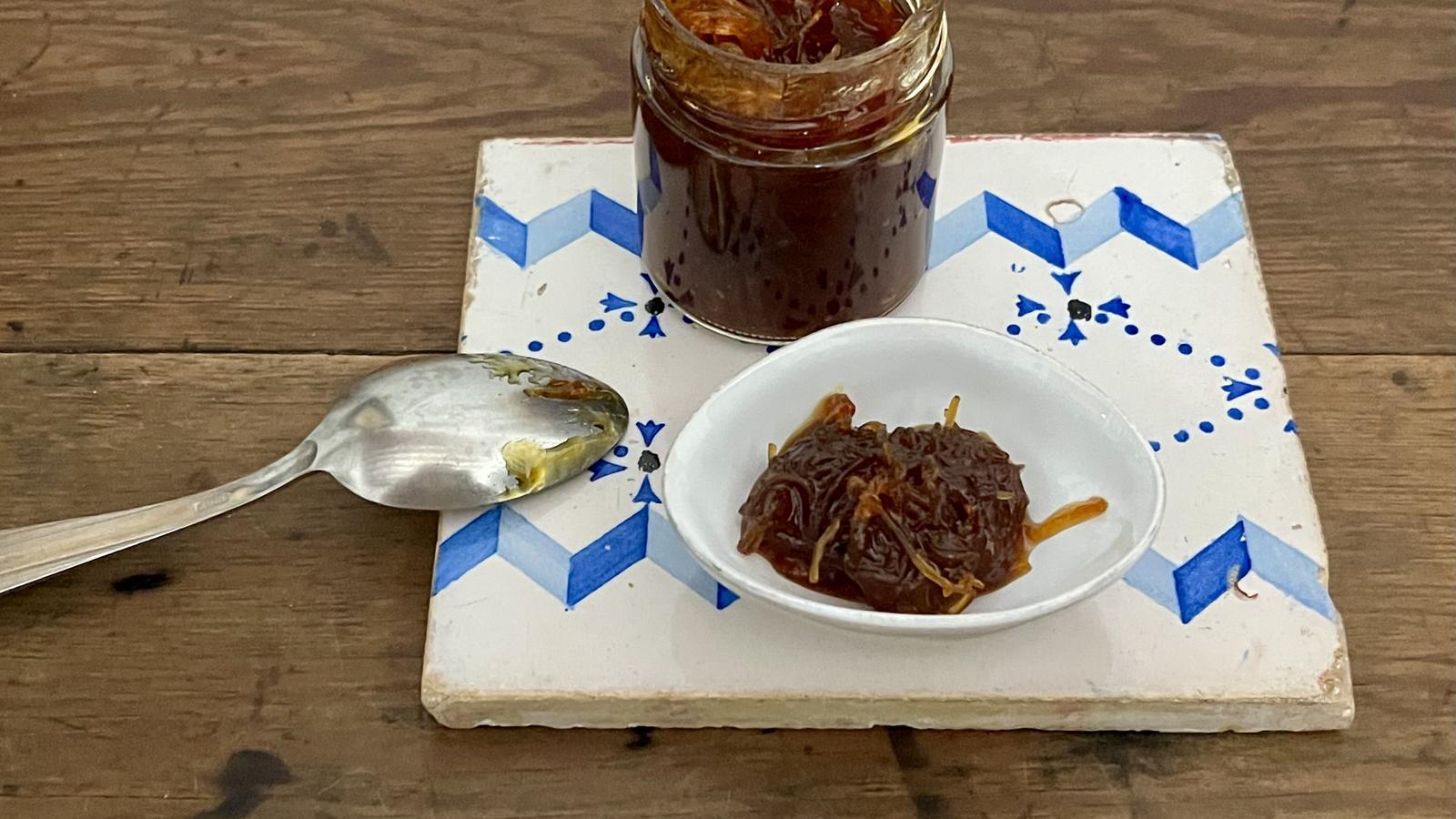

PalmaFew plants have accompanied humans throughout history as much as gourds. Present in cultures on every continent, they have been much more than food: they have served as containers, tools, musical instruments, and even life preservers. Currently, we associate them with gastronomic terms, as part of creams, in stews, pickles, and desserts.
The earliest evidence of gourd use dates back over 8,000 years in America. At that time, however, they were not cultivated as much for their pulp as for their practical utility. Some varieties, such as the bottle gourd, were left to dry until the skin became hard and impermeable. When emptied, they became ideal containers for transporting water, grain, and fermented liquids. This same quality made them perfect for floating and they were used as buoys. The word 'carabassa', whose first written record dates from 1249, derives from a form of Vulgar Latin, calapaccea, derived from calappacus (turtle), by comparison of the gourd with the shell of these animals.
Over time, the different species of pumpkin were selected according to human needs. Thus, while some were perfected as utensils, others were perfected as food. Some small varieties with whimsical shapes have been cultivated for decorative purposes. In many places, dried pumpkins have also been musical instruments and as sounding boards for many popular instruments such as certain xylophones and rattles.
Pastry tradition
In cooking, varieties with firm, flavorful pulp are appreciated, while others, more discreet, have played a very specific but fundamental role. This is the case of the angel hair squash, a good-sized variety with green and white skin that is surprising inside, as its pulp breaks down into threads. An incredible texture that results in a unique preserve. For centuries, this preparation has been a central element of traditional pastry making, filling ensaïmades, coques, and pastissets. Angel hair preserve is one of the most unique and beloved preparations in our pastry tradition. It is made from a variety of squash called Cucurbita ficifolia, also known as 'cidra squash'. When cooked, its pulp breaks down into fine, long fibers, like threads – hence the poetic name 'angel hair'.
This variety of pumpkin is of American origin and did not reach Europe until after Columbus's voyages. This means that any specific preparation with this variety cannot be documented before the modern age. Angel hair jam, as we know it today, did not appear immediately but is the result of a slow evolution that combines new raw materials and existing culinary techniques.
In the great recipe books of the 17th century, we find recipes for pumpkin preserved in sugar, but it is not yet angel hair in the strict sense, but rather a way of preserving fruits and vegetables in sugar.
Brother Jaume Oliver (18th century) describes in his recipe book the characteristic technique as we know it today. He mentions that the pumpkin can be cooked in two ways: one, boiled in pieces in water, and the other by roasting it first in the oven. The resulting flesh will then be cooked in clarified sugar. In the manuscripts of the Llabrés archive (19th century), the pumpkin is made into pieces which are covered with water that is changed for two days. Curiously, 20th-century cooking manuals seem to forget about angel hair and it is not very present. However, its presence in traditional sweets has made it one of the most special and characteristic jams in our pastry. Today's recipe is the jam my Aunt Antonina used to make, the only one I like and the most special I have ever tasted. I hope you like it and that you are encouraged to make it, you won't be disappointed.
We will put the pumpkin in the oven, whole. We will leave it there for about 45 minutes at 180 ºC and turn it over. When the skin is soft, it will be a sign that it is cooked. We will remove it and open it, remove the pulp and discard the seeds.We will weigh the pulp to know the amount of sugar we will need, which must be equivalent. We will let the pulp macerate for a few hours with half of this sugar in a pot with the lemon peel, orange peel, and cinnamon.After the time has passed, we will cook it until we find that the filaments are transparent.Meanwhile, we will make a caramel with the other half of the sugar we had left. When it is ready, we will pour it into the pot and stir it so that it mixes well. We will let it cook for about five minutes, turn off the heat, and distribute the angel hair into jars.My angel hair cooked for about 40 minutes before adding the caramel.Since I made two pumpkins, I made the caramel in two batches because it seemed less risky and it was worth it.
Angel hair pumpkinSugar1 lemon1 orange1 cinnamon stick
